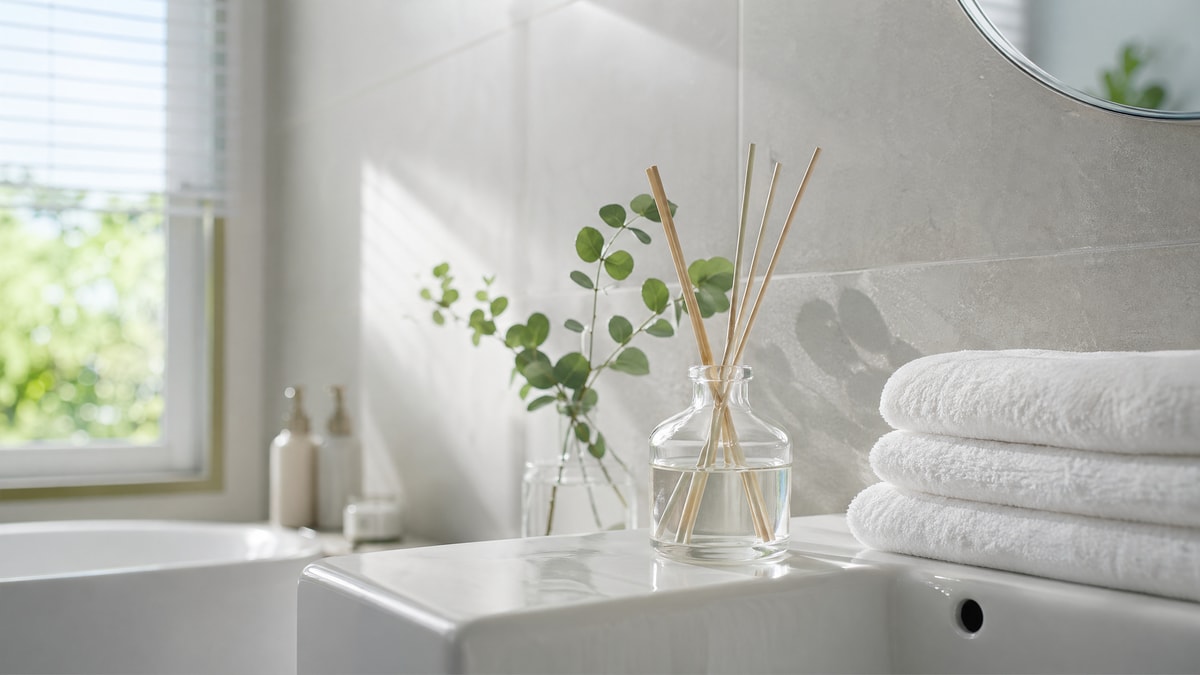
Choosing a Reed Diffuser for bathroom spaces can be tricky: you want a clean, fresh aroma without creating an overwhelming scent in a small room. The right balance depends on fragrance strength, room size, reed count, and placement. This guide explains how to select a diffuser that keeps your bathroom inviting, comfortable, and easy to maintain.
Why does a Reed Diffuser for bathroom areas often feel too strong?
A bathroom is usually one of the smallest enclosed spaces in a home, hotel, office, or retail environment. In many cases, the room measures roughly 3–8 square meters, which means fragrance concentration builds faster than it would in a living room or lobby. That is why a Reed Diffuser for bathroom use must be chosen with more care than a diffuser for larger spaces.
Users and operators often make one common mistake: they buy a diffuser based on how it smells in a store or on a product page, not on how it performs after 24–72 hours in a humid room. Bathrooms trap scent, and warm steam from showers can amplify fragrance projection. A blend that feels balanced in open air may become sharp, sweet, or heavy in a closed setting.
For buyers, distributors, and sourcing teams in consumer goods channels, this also matters at a category level. Bathroom fragrance products sit between personal care, household goods, and gifting segments. TrendNest Daily tracks these category overlaps because product selection today is not only about aroma preference, but also about user comfort, product turnover, refill demand, and small-space performance.
If your goal is a fresh and non-overpowering bathroom scent, start by evaluating 4 core variables: room size, fragrance family, liquid volume, and reed count. These factors shape diffusion speed more than decorative packaging does, and they give a clearer basis for product comparison.
Key reasons scent overload happens
- The fragrance oil is designed for medium rooms, but the bathroom is under 5 square meters.
- Too many reeds are inserted at the start, often 6–8 instead of 2–4.
- The diffuser is placed near direct heat, a sunny window, or strong airflow, which accelerates evaporation.
- The scent profile is too dense for the space, such as gourmand, heavy floral, or resin-rich blends.
How to choose the right scent profile and diffuser strength
When selecting a Reed Diffuser for bathroom use, scent family matters as much as bottle size. In small, moisture-rich spaces, clean citrus, light marine, soft herbal, green tea, and mild eucalyptus styles usually perform better than dense vanilla, amber, musk, or spicy blends. The goal is not a stronger fragrance, but a cleaner perception with lower sensory fatigue over repeated daily use.
For bathrooms used by multiple people, such as shared family spaces, hospitality guest rooms, or workplace restrooms, neutral freshness is often the safer choice. A subtle profile reduces the risk of user rejection and avoids competing with soap, shampoo, and cleaning product aromas already present in the room. This is especially relevant for operators managing 10, 50, or 100+ rooms where scent consistency affects overall experience.
Another decision point is liquid volume. For small bathrooms, 50 ml to 100 ml is often a practical starting range. Larger bottles may look economical, but if paired with high-volatility fragrance oils and too many reeds, they can feel excessive. Many users get better control from a smaller bottle with refill availability than from one oversized diffuser that cannot be adjusted easily.
You should also ask whether the product offers adjustable intensity. A diffuser that works with 2, 3, or 4 reeds gives more flexibility than one marketed only for maximum throw. For operators, that flexibility helps reduce complaints and improves suitability across different bathroom layouts.
Which fragrance families are usually better for bathrooms?
The table below compares common fragrance directions for a Reed Diffuser for bathroom applications. It is useful for sourcing teams, retailers, and end users who need a quick screening method before ordering samples or placing bulk orders.
A practical takeaway is simple: if the bathroom is small, start with freshness-oriented profiles and test them over 2–3 days rather than judging in the first 10 minutes. Initial smell and real-world room performance are often different.
A simple strength selection rule
- For very small bathrooms under 4 square meters, begin with 50 ml and 2–3 reeds.
- For average bathrooms around 4–8 square meters, 50–100 ml with 3–4 reeds is often easier to control.
- For better-ventilated or larger layouts, increase reed count gradually every 24 hours, not all at once.
What product specifications should buyers and users check first?
A Reed Diffuser for bathroom selection should not be based on scent name alone. Operators should review several practical specifications before purchase: bottle volume, recommended room size, number and material of reeds, expected usage period, and refill support. These details affect both user satisfaction and inventory planning.
Typical consumer market offerings range from 50 ml to 200 ml, but for bathroom use, larger is not always better. A 100 ml diffuser may last roughly 4–8 weeks depending on reed count, ambient temperature, ventilation, and oil composition. Faster evaporation is common in humid spaces, so usage period should be treated as a range rather than a fixed promise.
Reed material also matters. Fiber reeds often provide more consistent diffusion, while natural rattan reeds can vary in performance depending on pore structure. For end users who want lighter fragrance control, products that allow partial reed removal are easier to manage than sealed or preset systems.
From a procurement perspective, bathroom fragrance lines also benefit from practical packaging choices. Leak resistance, stable bottle base design, clear refill labeling, and easy shelf display all matter for retail, hospitality supply, and export channels. TrendNest Daily often highlights these details because small consumer goods succeed when both sensory appeal and operational handling are considered together.
Specification checklist for selection
Use the following screening table when comparing a Reed Diffuser for bathroom options across brands, private label offers, or wholesale catalogs. It helps narrow choices based on practical performance instead of marketing claims alone.
If a product listing does not mention room size, reed adjustment, or estimated duration, buyers should request clarification before ordering. Missing specification detail can lead to higher return rates or poor repeat purchases, especially in online and cross-border channels.
Three checks before placing an order
- Confirm whether the fragrance is positioned for small enclosed rooms, not just general home use.
- Ask whether the product supports intensity adjustment through reed count or refill variation.
- Check if packaging is suitable for storage, gifting, retail shelving, or transport in humid climates.
How should you place and maintain a Reed Diffuser for bathroom performance?
Even the right product can feel too strong if it is used incorrectly. Placement should avoid direct proximity to heat sources, window sun exposure, or strong ventilation outlets. In a bathroom, the best position is usually a stable countertop, shelf, or cabinet top where airflow is gentle and the bottle will not be knocked over during daily use.
If the scent becomes heavy after the first week, do not replace the product immediately. First reduce the reed count by 1–2 sticks and monitor the space for 24–48 hours. In many cases, this single adjustment is enough to improve comfort. For small bathrooms, rotating all reeds too frequently can also intensify the fragrance too fast, so a moderate schedule works better.
A practical maintenance rhythm is to flip reeds every 7–14 days rather than every day. High-frequency flipping may be useful for large rooms or special events, but in compact bathrooms it often creates unnecessary intensity. Operators managing guest bathrooms or showroom restrooms should standardize this routine to keep scent levels consistent across locations.
Users should also consider the interaction between fragrance and cleaning products. If bleach, disinfectants, or strong lemon cleaners are used daily, a highly perfumed diffuser can create a mixed scent effect. A lighter bathroom diffuser usually integrates better with the room’s existing product environment.
Best-practice setup steps
- Start with fewer reeds than the package maximum, especially in bathrooms under 5 square meters.
- Place the bottle at least one arm’s length away from direct shower steam or heater airflow.
- Test scent strength over 2–3 days before increasing diffusion intensity.
- Review liquid level weekly so refill timing can be planned rather than handled reactively.
Common operator mistakes
In hospitality and retail settings, staff sometimes place the same diffuser specification in every restroom regardless of ventilation, occupancy, or cleaning schedule. That creates uneven user experience. A better approach is to classify bathrooms into 2–3 usage types, then assign lighter or stronger scent configurations based on actual room conditions.
FAQ and buying guidance: what should users, retailers, and sourcing teams ask?
Because bathroom fragrance products sit at the intersection of home care, beauty-adjacent lifestyle goods, and small consumer commodities, buying decisions often involve more than aroma. Questions about refill cycles, packaging durability, small-space suitability, and market preferences are common across retail, wholesale, and export channels.
The following FAQ focuses on search-driven buyer concerns and practical operator decisions. It is especially useful when reviewing multiple Reed Diffuser for bathroom options or preparing a curated product assortment.
How many reeds should a bathroom diffuser use?
For most compact bathrooms, 2–4 reeds are a safer starting point than using the full set immediately. If the room is under 4 square meters, begin at the lower end. Add one reed only after 24 hours if the scent feels too faint. This method gives better control than trying to reduce intensity after overload has already happened.
Is a larger bottle more cost-effective?
Not always. A large bottle may lower cost per milliliter, but it can still be a poor fit if the scent becomes overpowering or evaporates too quickly in warm humidity. In many cases, a 50–100 ml diffuser with refill support offers better value because it improves user acceptance and reduces waste from unsuitable intensity.
What should importers or private label buyers check before sourcing?
Check 5 areas first: fragrance positioning, room size guidance, packaging security, labeling compliance for your market, and refill availability. If you are selling through cross-border e-commerce or specialty retail, clear product descriptions and usage instructions can reduce post-sale complaints and help customers choose the right Reed Diffuser for bathroom use.
Are there any basic compliance points to consider?
Yes. While requirements vary by market, buyers should review ingredient communication, warning labels, transport packaging, and general consumer product labeling practices. For export-oriented business, it is wise to confirm these points during quotation and sample review, not after production starts.
Why choose us for category insight and sourcing guidance?
TrendNest Daily supports professionals who need more than a simple product recommendation. Our coverage connects fragrance-related household goods with broader developments in personal care, beauty, small commodities, packaging, supply chains, and cross-border trade. That wider view helps users and operators understand not only what works in a bathroom, but also what sells, what adapts well to different channels, and what trends are shaping future demand.
If you are comparing Reed Diffuser for bathroom options for retail, distribution, sourcing, or private label development, we can help you narrow decisions based on real category logic. This includes fragrance direction screening, bottle size selection, packaging evaluation, refill strategy, and practical questions about room-size suitability and product positioning.
You can contact us to discuss 6 key topics: parameter confirmation, product selection, expected delivery cycle, custom assortment planning, labeling and compliance questions, and sample support. For many consumer goods projects, resolving these points early can shorten decision time by 1–2 review rounds and reduce mismatches between purchase intent and actual end use.
Whether you are a buyer, distributor, brand operator, or marketplace seller, we can help you evaluate which Reed Diffuser for bathroom products match your target users, pricing level, and channel strategy. Reach out when you need a clearer comparison framework, a shortlist for sampling, or guidance on balancing scent appeal with practical small-space performance.
Industry Global
Related News
- 00
0000-00
How to Shortlist a Home Decor Manufacturer for Export Projects - 00
0000-00
Fragrance Wholesale in 2026: What Buyers Need to Know Before Importing - 00
0000-00
How to Choose an Aroma Diffuser for Home Based on Room Size - 00
0000-00
How to Pick Decorative Items for Office Without Making It Look Cluttered - 00
0000-00
Home Styling Tips That Make Small Spaces Feel More Put Together
Weekly Insights
Stay ahead with our curated technology reports delivered every Monday.
Related News
 How to Shortlist a Home Decor Manufacturer for Export ProjectsHome Decor manufacturer guide: learn how to shortlist export-ready partners for Home Fragrance diffuser, Decorative Items for office, and custom gifts for corporate with less sourcing risk.
 Fragrance Wholesale in 2026: What Buyers Need to Know Before ImportingFragrance wholesale in 2026: learn how to evaluate Home Fragrance diffuser, Aroma Diffuser for home, Scented Candles custom, and Essential Oils for relaxation before importing.
 How to Choose an Aroma Diffuser for Home Based on Room SizeAroma Diffuser for home guide by room size: compare Home Fragrance diffuser types, Reed Diffuser benefits, Essential Oil Diffuser price, and Aromatherapy Oils for sleep to choose the best fit.
 How to Pick Decorative Items for Office Without Making It Look ClutteredDecorative Items for office made simple: discover Home Styling tips, smart office supplies bulk order ideas, and sourcing advice from a Home Decor manufacturer for a clean, professional workspace.