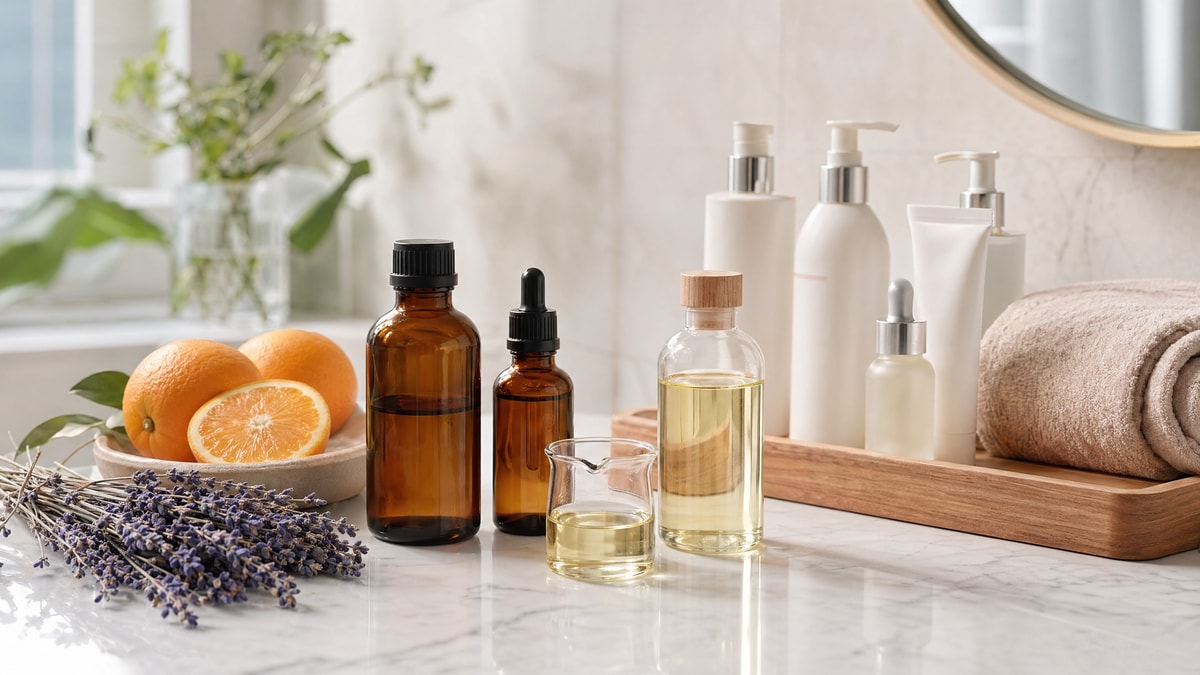
Essential Oils for skin care are widely used at home, yet many people apply them incorrectly and risk irritation, sensitivity, or reduced results. As consumer interest in natural beauty continues to grow, understanding common misuse has become increasingly important for both informed shoppers and industry observers. This article explores where mistakes happen, why they matter, and how safer, more effective use can support better skin care decisions.
Understanding Essential Oils for Skin Care in the Home-Use Market
Essential Oils for skin care refer to highly concentrated aromatic extracts used in facial, body, and scalp routines for fragrance, sensory appeal, and targeted cosmetic support. In consumer markets, they are often associated with “natural” positioning, but concentration levels can vary greatly, and even 1 to 3 drops may represent a potent dose in a small amount of product. This matters because home users frequently assume that plant-derived ingredients are automatically mild, which is not always true.
For information researchers following beauty, personal care, and small commodity sectors, this category sits at the intersection of product innovation, ingredient storytelling, and safety education. Essential oils appear in serums, body oils, bath products, masks, rollers, and DIY blends. Their presence is especially visible in fast-growing consumer segments such as clean beauty, spa-at-home care, and wellness-inspired cosmetics, where packaging and marketing can shape expectations more strongly than technical usage guidance.
A key industry issue is not whether Essential Oils for skin care can be used, but how they are used. The difference between a leave-on product and a rinse-off product, a 0.5% dilution and a 5% dilution, or occasional use and daily application can significantly affect skin tolerance. In practical terms, misuse often comes from weak labeling literacy, confusion between cosmetic and therapeutic claims, and the popularity of social media routines that simplify complex ingredient behavior.
Why this topic draws broad market attention
The broader consumer goods industry watches this category because it influences formulation trends, return rates, customer education needs, and cross-border compliance discussions. In the beauty and personal care channel, products featuring essential oils often sell on emotional appeal, but if misuse leads to discomfort within 24 to 72 hours, it can quickly affect brand trust and repeat purchase behavior. This makes proper communication just as important as ingredient selection.
For distributors, e-commerce sellers, and product planners, Essential Oils for skin care also reflect a wider market tension: consumers want simple, natural-sounding solutions, while actual safe use requires nuance. That is why this topic remains relevant not only to end users but also to manufacturers, private-label developers, and content teams preparing instructions, warnings, and consumer-facing product pages.
Core points to keep in mind
- Essential oils are concentrated cosmetic ingredients, not direct substitutes for standard moisturizers or barrier-repair products.
- Home misuse often involves excessive frequency, poor dilution, or applying the wrong oil to the wrong skin condition.
- The gap between marketing language and practical safety guidance is a recurring issue across beauty retail channels.
Where Home Users Commonly Misuse Essential Oils for Skin Care
The most common misuse is direct application without sufficient dilution. Many consumers place neat essential oil straight onto the face, spots, or dry patches, expecting faster results. In reality, facial skin has a thinner barrier than many body areas, and repeated direct exposure may increase stinging, redness, or post-use sensitivity. In most cosmetic contexts, dilution in a carrier base is the standard starting point rather than an optional extra step.
Another frequent problem is using too many active layers in one routine. A person may combine exfoliating acids, retinoid products, fragrance-heavy creams, and Essential Oils for skin care in the same evening. Even if each product seems acceptable on its own, cumulative irritation can rise sharply when three or four stimulating inputs are stacked together. This is especially relevant in home routines influenced by trend-driven “multi-step” skin care habits.
Timing and storage are also often overlooked. Citrus-derived oils may raise photosensitivity concerns in certain formulations, while oxidized oils stored in heat or light may become less stable over time. A bottle opened for 6 to 12 months and kept in a warm bathroom does not necessarily perform the same way as a freshly opened item stored in a cool, dry place. For informed shoppers, these are practical variables rather than minor details.
Typical misuse patterns seen across consumer routines
The following overview summarizes recurring home-use issues observed across beauty and personal care categories. It is useful for understanding how Essential Oils for skin care become a risk point not because the category is inherently unsuitable, but because routine design, dosage, and context are often poorly matched.
This pattern matters commercially because customer dissatisfaction often comes from use conditions rather than ingredient concept alone. For beauty retailers and product developers, clearer instructions on dilution, storage, and pairing with other actives can reduce misunderstanding and improve post-purchase experience.
High-risk habits to watch
- Using essential oil daily on the same facial area for 2 weeks or longer without monitoring irritation.
- Applying essential oils after aggressive exfoliation, shaving, or skin picking.
- Relying on online recipes that do not specify dilution percentages or skin type suitability.
Why Misuse Matters for Skin Health and Industry Decision-Making
When Essential Oils for skin care are misused, the most immediate concern is skin barrier disruption. A compromised barrier can show up as tightness, patchy dryness, visible redness, or a stronger reaction to products that were previously tolerated. In many cases, the issue is not dramatic injury but cumulative low-level stress that becomes noticeable after several days of repeated exposure. This subtle pattern can confuse consumers and lead them to blame the wrong product.
For the beauty and personal care industry, misuse also creates a communication challenge. Brands may formulate within reasonable cosmetic norms, yet user-generated content can encourage “more is better” behavior that no label intended. This means that educational content, FAQ design, and after-sales guidance have strategic value. On e-commerce platforms, even a short note explaining patch testing, dilution, and frequency can improve clarity at the decision point.
There is also an international trade angle. Cross-border sellers serving multiple markets often face varying expectations around labeling, fragrance allergens, and cosmetic usage statements. While exact regulations differ, a practical baseline is to avoid overstated claims and provide simple, understandable instructions. In sectors like personal care, this is not just a compliance issue; it directly affects user confidence and category credibility.
Different skin situations call for different caution levels
Not all consumers face the same level of risk. The table below helps information researchers and category observers understand where Essential Oils for skin care may require stronger caution based on common skin conditions and routine context.
From a market perspective, this reinforces the need for more segmented product education. A one-line message saying a formula is “for all skin types” may not be enough when fragrance intensity, active pairing, and barrier status all influence real-world results.
Practical Home-Use Guidance and Better Evaluation Criteria
A safer approach to Essential Oils for skin care begins with moderation and context. Consumers should treat these ingredients as part of a broader formulation strategy rather than as stand-alone miracle solutions. Patch testing on a small area for 24 hours, limiting first use to once or twice weekly, and avoiding immediate combination with exfoliating acids are sensible baseline steps in most non-medical cosmetic routines.
For product evaluators, whether in sourcing, retail, or market research, the better question is not simply “Does the formula contain essential oils?” but “How are they positioned, diluted, and supported?” A formula paired with a stable carrier oil, clear application directions, and realistic frequency guidance is easier to use correctly than a product that relies only on natural imagery and broad wellness claims. These details can shape user satisfaction more than front-label appeal.
It is also useful to separate rinse-off and leave-on contexts. A cleanser or bath product with brief contact time presents a different exposure profile from a facial oil or overnight mask. In home settings, that difference can be the line between pleasant sensory use and repeated overexposure. For informed shoppers, understanding contact time, dilution range, and routine fit provides a more reliable evaluation framework.
A practical checklist for evaluating product use
- Check whether the product is leave-on or rinse-off before deciding frequency of use.
- Look for instructions on dilution, patch testing, and whether the product is intended for facial skin or body skin.
- Avoid combining new essential-oil products with two or more strong actives in the same 7-day trial period.
- Review packaging condition and storage guidance, especially if the product has been open for several months.
What stronger product communication should include
Across the personal care supply chain, stronger communication around Essential Oils for skin care usually includes five points: intended use area, contact time, recommended frequency, storage expectations, and basic compatibility warnings. These are simple but high-value information elements for product pages, retailer listings, and export documentation. In a crowded category, clear education can differentiate a responsible product just as much as fragrance profile or packaging design.
For manufacturers and brands following category trends, this area also presents a product planning opportunity. As consumers become more ingredient-aware, there is growing room for gentler positioning, lower-intensity formulations, and educational claims centered on responsible use. Over the next 12 to 24 months, better-informed messaging may become a competitive advantage in natural beauty and home-spa segments.
Why Market Insight Matters and How to Move Forward
Essential Oils for skin care remain relevant because they connect beauty trends, sensory product design, and consumer demand for plant-based routines. Yet the same features that make them attractive in the marketplace can also create confusion at home. For information researchers, the key takeaway is that misuse is rarely random; it usually follows predictable gaps in dilution awareness, routine design, and label interpretation.
This makes the category valuable to watch across product innovation, retail communication, and supply chain planning. Whether assessing a new launch, benchmarking competitors, or studying consumer behavior in personal care, it helps to look beyond ingredient presence alone. Usage instructions, format type, and barrier-safety positioning often reveal more about long-term market fit than trend language by itself.
If your business tracks beauty, cosmetics, personal care, or adjacent consumer goods, careful analysis of Essential Oils for skin care can support better category decisions. It can help identify safer formulation directions, improve product communication, and align offerings with real user behavior instead of idealized marketing assumptions.
Why choose us
TrendNest Daily provides practical industry insight across small commodities, beauty and personal care, household goods, and related consumer product ecosystems. We help readers interpret category shifts, product positioning logic, and market signals that affect sourcing, planning, and cross-border development.
If you need support on product selection, ingredient positioning, delivery cycle expectations, export-oriented market trends, compliance-sensitive communication, sample evaluation direction, or quote-related market context, contact us for focused industry information. Our coverage is designed to help manufacturers, buyers, distributors, brands, and sellers make better-informed decisions with clearer commercial perspective.
Industry Global
Related News
- 00
0000-00
How to Shortlist a Home Decor Manufacturer for Export Projects - 00
0000-00
Fragrance Wholesale in 2026: What Buyers Need to Know Before Importing - 00
0000-00
How to Choose an Aroma Diffuser for Home Based on Room Size - 00
0000-00
How to Pick Decorative Items for Office Without Making It Look Cluttered - 00
0000-00
Home Styling Tips That Make Small Spaces Feel More Put Together
Weekly Insights
Stay ahead with our curated technology reports delivered every Monday.
Related News
 How to Shortlist a Home Decor Manufacturer for Export ProjectsHome Decor manufacturer guide: learn how to shortlist export-ready partners for Home Fragrance diffuser, Decorative Items for office, and custom gifts for corporate with less sourcing risk.
 Fragrance Wholesale in 2026: What Buyers Need to Know Before ImportingFragrance wholesale in 2026: learn how to evaluate Home Fragrance diffuser, Aroma Diffuser for home, Scented Candles custom, and Essential Oils for relaxation before importing.
 How to Choose an Aroma Diffuser for Home Based on Room SizeAroma Diffuser for home guide by room size: compare Home Fragrance diffuser types, Reed Diffuser benefits, Essential Oil Diffuser price, and Aromatherapy Oils for sleep to choose the best fit.
 How to Pick Decorative Items for Office Without Making It Look ClutteredDecorative Items for office made simple: discover Home Styling tips, smart office supplies bulk order ideas, and sourcing advice from a Home Decor manufacturer for a clean, professional workspace.