Choosing promotional items for trade shows is no longer about giving away anything cheap—it is about offering something useful enough to stay on desks, in bags, and in daily routines. For project managers and engineering decision-makers, the right giveaway can turn a brief booth visit into a lasting brand impression while supporting practical business conversations and follow-up opportunities.
Why trade show giveaways are changing in practical B2B sectors
A visible shift has taken place across industrial and consumer goods exhibitions over the last 3 to 5 years. Buyers, sourcing teams, and project leads are moving away from disposable giveaways and paying more attention to promotional items for trade shows that have a real use case. In sectors linked to small commodities, personal care packaging, beauty accessories, and compact home appliances, the most remembered brands are often the ones that offer simple tools people continue using for 30, 60, or even 180 days after the event.
This change matters because trade show traffic is more selective than before. A booth may have only 3 to 8 minutes to create interest, qualify a visitor, and secure a future meeting. When the giveaway is relevant to the attendee’s work, it supports recall long after product brochures are lost. For project managers, that means a better chance of moving a discussion from booth chat to sample review, supplier screening, or RFQ planning.
Another signal is budget discipline. Many exhibitors now prefer lower-volume, higher-retention items instead of ordering 5,000 pieces of something forgettable. The focus is shifting toward retention rate, desk visibility, and repeat handling frequency. A practical item touched 2 to 5 times per week can deliver stronger brand exposure than a low-value novelty item distributed in bulk within a single day.
Key signals behind the shift
- Visitors increasingly expect useful, portable, and work-related items rather than random souvenirs.
- Procurement and engineering roles often value function, durability, and convenience over visual gimmicks.
- Exhibitors are measuring post-show conversion quality, not just booth footfall or giveaway quantity.
- Sustainability and waste reduction are pushing companies toward longer-use promotional items for trade shows.
The strongest trend: utility now beats novelty
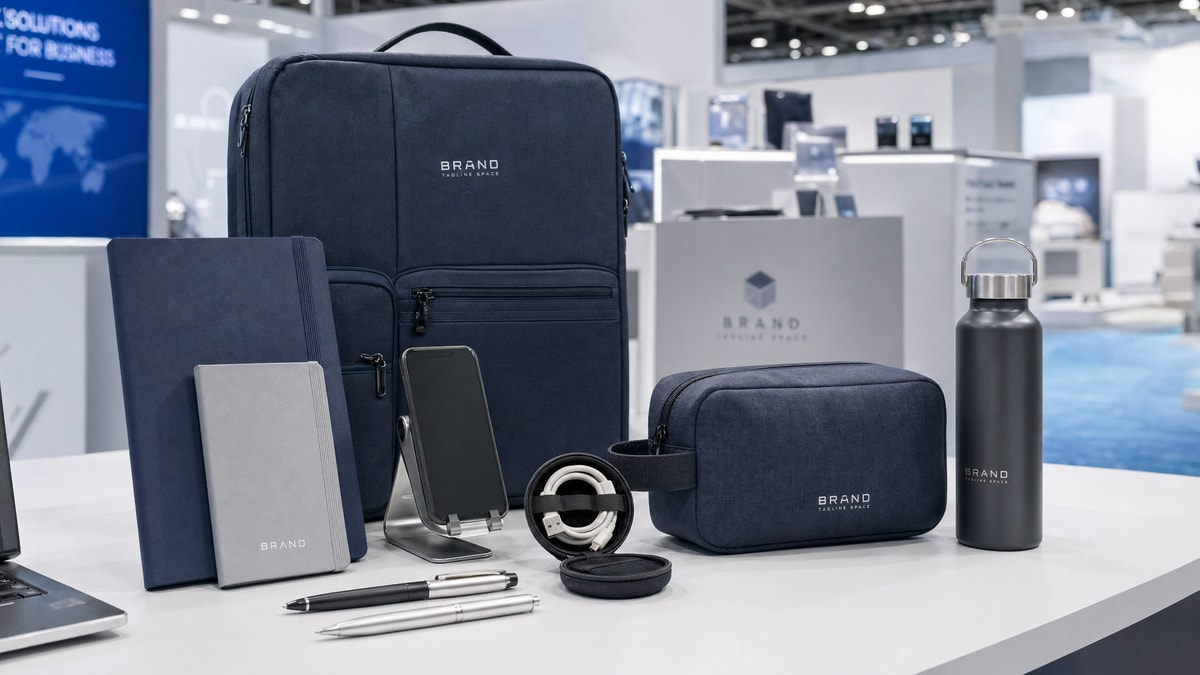
The most important trend is clear: utility is outperforming novelty. In practice, people keep giveaways that solve a small daily problem. For a project manager, this may be a cable organizer, notebook with planning layout, badge holder, compact tool, reusable bottle, or power accessory. These items fit working routines and remain visible in offices, factories, meetings, and travel bags.
This trend is especially relevant for companies operating across broad consumer goods categories. A beauty packaging supplier, a personal care accessory exporter, or a small appliance component maker may all attend the same exhibition, yet their visitors often share similar decision habits. They respond well to items that feel thoughtful, portable, and durable enough to survive several weeks of use. In many cases, the best promotional items for trade shows are not expensive; they are simply well matched to the attendee’s work environment.
A second layer of the trend is brand fit. Useful items work better when they connect naturally to the exhibitor’s category. A company involved in compact household devices might choose cable wraps or mini cleaning cloths. A supplier in personal care packaging might choose travel pouches or refillable organizers. Relevance strengthens memory and makes follow-up communication feel more coherent.
The table below shows how giveaway preferences are shifting from older trade show habits to more retention-focused decisions.
For exhibitors, the takeaway is straightforward: a retained item can outperform a flashy one. If a giveaway remains in use for even 8 to 12 weeks, it has already done more than most printed handouts. That is why practical promotional items for trade shows are gaining priority in budget planning.
What project managers are more likely to keep
Desk and meeting tools
Items used during planning, note-taking, and review meetings tend to have high retention. Examples include structured notebooks, quality pens, sticky note sets, webcam covers, and phone stands. These products are low-risk, easy to transport, and useful across multiple industries.
Travel and site-use items
Attendees moving between plants, client sites, and supplier visits often keep luggage tags, cable pouches, collapsible bottles, hand-sanitizer holders, or compact flashlights. If an item fits into a laptop bag and adds convenience during weekly travel, it stands a better chance of staying with the user.
Light technical accessories
Simple but reliable accessories such as charging cables, cable ties, screen cleaners, and adapter pouches perform well because they support daily device use. In a digital-first work environment, these practical gifts align naturally with the routines of engineering and project teams.
What is driving demand for better promotional items for trade shows
Several forces are pushing exhibitors to rethink giveaway strategy. First is the higher cost of trade show participation. Booth build, logistics, samples, staffing, and travel can add up quickly, so every supporting detail must work harder. Promotional items for trade shows are now expected to contribute to lead quality, not just booth traffic.
Second is attendee fatigue. Professionals in sourcing, manufacturing, and product development attend multiple exhibitions each year and may receive dozens of items within 2 to 4 days. Only the most practical items survive the trip home. That creates a strong filter: portability, weight, and immediate usefulness matter more than visual complexity.
Third is the increased overlap between brand image and operational values. A company that claims to support efficiency, quality control, and product reliability should reflect those qualities in its giveaway choice. A weak or irrelevant item creates a mismatch. A well-made and functional item reinforces the company message before the first email follow-up is sent.
Common drivers behind current selection criteria
- Shorter attention windows at busy exhibitions make immediate relevance more important.
- Visitors prefer products that fit carry-on luggage, backpacks, or office drawers.
- Exhibitors want clearer alignment between giveaway choice and brand positioning.
- Practical products generate better follow-up talking points after the event.
The following table outlines practical selection criteria for different giveaway directions.
The table also shows why selection should start with audience behavior rather than product novelty. If the item does not fit how the visitor works, travels, or organizes daily tasks, retention drops sharply no matter how attractive the packaging looks.
How these trends affect sourcing, branding, and event execution
For sourcing teams and exhibitors, the move toward practical promotional items for trade shows changes planning in three ways. First, procurement must begin earlier. A customized useful item often needs 2 to 6 weeks for sampling, branding confirmation, production, and shipping, depending on quantity and decoration method. Last-minute ordering increases the risk of settling for generic stock.
Second, giveaway design now needs coordination with brand, sales, and exhibition teams. A project manager may care most about delivery timing and unit consistency, while sales wants engagement value and brand wants visual coherence. Better outcomes happen when all three functions agree on audience profile, target quantity, and the exact message the item should support.
Third, the booth distribution model is changing. Not every visitor needs the same item. Many exhibitors now divide giveaways into at least 2 tiers: open-distribution items for general traffic and higher-value retained items for qualified prospects, scheduled meetings, or priority buyers. This approach helps balance cost control and conversion focus.
Operational questions worth asking before ordering
- Will the item still be useful 30 days after the event?
- Can it fit easily into a visitor’s tote bag, laptop bag, or carry-on case?
- Does the branding stay visible without making the item feel oversized or awkward?
- Is the quantity aligned with expected booth traffic, qualified lead volume, and event duration?
- Does the product match the exhibitor’s category, such as beauty accessories, personal care, packaging, or small appliances?
Impact on supplier selection
Supplier choice becomes more important as quality expectations rise. Even for low-cost items, consistency in material, printing, assembly, and packing affects perception. In practical categories, defects such as weak hinges, poor cable performance, or leaking bottles can damage credibility faster than they save budget. That is why many buyers request pre-production samples, packaging photos, or small pilot runs before committing to larger volumes.
Impact on cross-border trade planning
For internationally sourced giveaways, timeline and compliance screening matter. Depending on the product type, buyers may need to review labeling, material declarations, battery-related restrictions, or destination-market safety expectations. A simple office accessory may move quickly, while a tech item could need more careful review before event shipment.
What companies should watch next when choosing promotional items for trade shows
Looking ahead, the most relevant signal is not whether giveaways disappear, but whether they become more targeted. The likely direction is smarter segmentation: fewer random items, more audience-fit utility, and closer alignment with business goals. For project managers and engineering buyers, this means exhibitors who understand working realities will stand out more clearly.
Another trend to watch is the merging of branding and workflow support. Items that assist note-taking, mobile charging, organization, hygiene, and travel convenience are likely to remain strong choices because they connect with modern business habits. Categories linked to personal care, everyday goods, and compact appliances can especially benefit from this shift because these industries already understand repeat-use product behavior.
Companies should also monitor how event formats evolve. Hybrid networking, tighter meeting schedules, and shorter booth interactions all increase the value of concise, practical touchpoints. In that environment, promotional items for trade shows work best when they are part of a broader follow-up plan that includes product sheets, digital contact exchange, and a clear next step within 7 to 14 days.
A practical decision framework
- Prioritize usefulness over novelty unless the novelty also solves a real problem.
- Match the item to role type: project managers, buyers, engineers, and channel partners use different tools.
- Balance unit cost with retention probability rather than focusing on low price alone.
- Build in enough lead time for sampling, branding review, and logistics confirmation.
- Use giveaways to support a conversation, not replace one.
Why choose us for trade show giveaway insight and sourcing support
TrendNest Daily follows product, sourcing, and market developments across small commodities, personal care products, beauty and cosmetics, and small home appliances. That broad category visibility helps businesses judge which promotional items for trade shows are moving from low-value giveaway status into practical brand tools with stronger retention potential.
If you are evaluating giveaway options for an upcoming exhibition, we can help you focus on the questions that matter: product fit for your audience, practical item selection, expected delivery cycle, customization approach, packaging considerations, and sourcing direction across relevant consumer goods categories. This is particularly useful for teams balancing brand goals with procurement timing and cost discipline.
Contact us if you want to discuss product selection, sample support, estimated lead times, customization options, packaging details, or sourcing trends related to office accessories, travel-use items, personal care-related giveaways, and compact utility products. A better giveaway starts with better judgment, and that judgment is easier when market signals, usage behavior, and supply considerations are reviewed together.
Industry Global
Related News
- 00
0000-00
How to Shortlist a Home Decor Manufacturer for Export Projects - 00
0000-00
Fragrance Wholesale in 2026: What Buyers Need to Know Before Importing - 00
0000-00
How to Choose an Aroma Diffuser for Home Based on Room Size - 00
0000-00
How to Pick Decorative Items for Office Without Making It Look Cluttered - 00
0000-00
Home Styling Tips That Make Small Spaces Feel More Put Together
Weekly Insights
Stay ahead with our curated technology reports delivered every Monday.
Related News
 How to Shortlist a Home Decor Manufacturer for Export ProjectsHome Decor manufacturer guide: learn how to shortlist export-ready partners for Home Fragrance diffuser, Decorative Items for office, and custom gifts for corporate with less sourcing risk.
 Fragrance Wholesale in 2026: What Buyers Need to Know Before ImportingFragrance wholesale in 2026: learn how to evaluate Home Fragrance diffuser, Aroma Diffuser for home, Scented Candles custom, and Essential Oils for relaxation before importing.
 How to Choose an Aroma Diffuser for Home Based on Room SizeAroma Diffuser for home guide by room size: compare Home Fragrance diffuser types, Reed Diffuser benefits, Essential Oil Diffuser price, and Aromatherapy Oils for sleep to choose the best fit.
 How to Pick Decorative Items for Office Without Making It Look ClutteredDecorative Items for office made simple: discover Home Styling tips, smart office supplies bulk order ideas, and sourcing advice from a Home Decor manufacturer for a clean, professional workspace.