
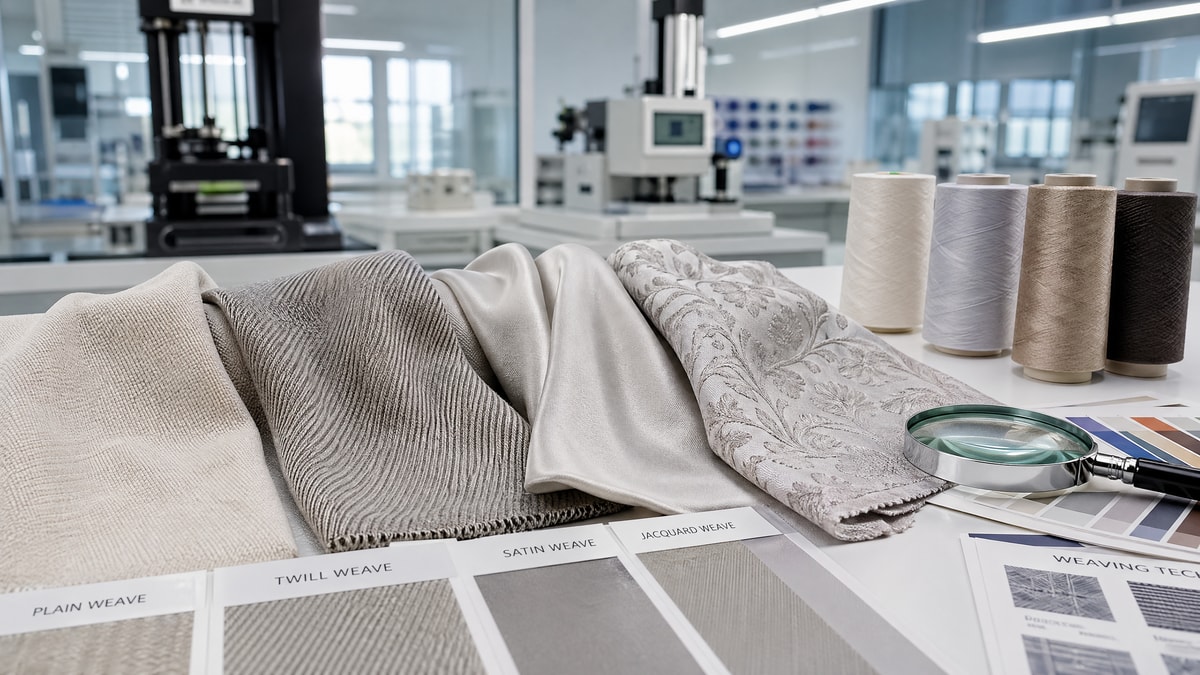
For technical evaluators comparing fabric performance, Textile Weaving techniques offer a practical lens for understanding how structure influences texture, drape, durability, and production cost. From plain and twill to satin and specialty constructions, each method affects material behavior, sourcing decisions, and end-use value. This overview highlights the key technical differences that matter when assessing textile quality, manufacturability, and commercial fit.
Why Textile Weaving techniques are gaining more scrutiny in current sourcing decisions
Across consumer goods sectors, fabric selection is no longer judged only by surface appearance. Technical evaluators now face tighter cost targets, shorter development cycles, and more specific end-use demands from apparel, beauty accessories, home textiles, organizers, and appliance-related soft components. In that environment, Textile Weaving techniques have become a more visible decision factor because weave structure directly shapes 4 core variables: hand feel, drape, mechanical stability, and process cost.
One clear market change is the rising preference for fabrics that look premium but remain commercially scalable. Buyers often compare 3 to 5 candidate constructions within a sampling cycle of 2 to 6 weeks, and the weave can change not only visual texture but also yarn consumption, loom speed, finishing requirements, and defect sensitivity. That means a weave decision made early in development can influence both unit economics and delivery reliability later in the supply chain.
For a news and trend platform serving manufacturers, buyers, distributors, and cross-border sellers, this shift matters because Textile Weaving techniques increasingly connect technical assessment with broader business outcomes. A fabric that performs well in laboratory checks but causes slower output, higher snag risk, or unstable dye uniformity may not fit the commercial target. Evaluators therefore need a structure-based review rather than a style-only review.
Current signals influencing weave selection
- Higher emphasis on balancing tactile value with manageable production cost, especially in mid-volume orders from 3,000 to 20,000 units.
- More end-use segmentation, with different expectations for softness, abrasion resistance, opacity, and wrinkle behavior.
- Closer review of how weave choice affects downstream finishing steps such as brushing, calendaring, coating, or printing.
- Greater concern about supply consistency, especially when sourcing across multiple mills or regions.
What is changing in fabric structure preferences across product categories
The market is not moving toward one universal weave. Instead, preferences are becoming more application-driven. Plain weave remains attractive where dimensional control, print clarity, and broad supplier availability are priorities. Twill continues to gain attention in categories that need a stronger visual grain, improved drape, or better resistance to showing soil and crease marks. Satin and sateen constructions are still selected for smoother surfaces, but technical evaluators are reviewing them more carefully because aesthetic gains may come with increased snagging risk or different durability trade-offs.
Another notable change is the growing use of specialty constructions to imitate premium texture without relying entirely on expensive fiber inputs. Basket weaves, dobby effects, and jacquard-derived surfaces can create higher perceived value through structure. This is commercially relevant in small home goods, beauty pouches, gift packaging textiles, storage products, and selected personal care accessories where tactile differentiation supports shelf appeal and export positioning.
For technical evaluators, the practical question is not which weave is best in general, but which Textile Weaving techniques create the best fit for performance targets, expected order volume, acceptable waste rate, and finishing pathway. In many projects, a 5% to 12% difference in yield loss or processing efficiency can erase the visual advantage of a more complex construction.
Comparing mainstream weave structures
The table below outlines how commonly used Textile Weaving techniques tend to differ in technical and commercial terms. These are general evaluation ranges rather than fixed rules, since fiber type, yarn count, density, and finishing can significantly shift final behavior.
The main interpretation is that weave choice changes more than aesthetics. Plain weave often supports cost discipline and stable quality control, while twill offers a useful middle position between appearance and function. Satin-type constructions may create stronger premium perception, but technical teams should check abrasion, snagging, seam behavior, and finishing consistency before approving them for volume production.
A trend worth monitoring
In many product categories, evaluators are moving toward “performance-looking” fabrics rather than purely decorative ones. That means weave structures that visually signal quality while still delivering practical resistance, predictable shrinkage ranges, and manageable conversion costs are likely to remain preferred over the next 12 to 24 months.
What is driving the shift in Textile Weaving techniques evaluation
Several factors are pushing weave assessment deeper into technical review. First, product lifecycles are shorter. When brands and distributors refresh collections every season or even every 8 to 12 weeks, they need fabric structures that can be sampled quickly and scaled with fewer surprises. Second, customer expectations have become more specific. A buyer may request softness plus opacity, or drape plus abrasion resistance, which often creates trade-offs that only become visible when the weave is examined alongside yarn and finish.
Third, cost pressure remains persistent. Even when raw material costs are relatively stable, weaving efficiency, loom utilization, defect frequency, and finishing compatibility can materially affect the final landed cost. Textile Weaving techniques therefore matter not just to the mill but also to importers, private-label operators, and sourcing teams working on competitive consumer goods categories.
Fourth, sustainability and waste awareness are changing evaluation behavior. Without making overstated claims, it is reasonable to say that constructions generating fewer production issues, lower rework frequency, or more reliable first-pass quality are receiving more attention. For technical evaluators, this shifts the discussion from isolated fabric appearance to total process efficiency.
Key drivers behind current weave decisions
The following overview helps connect trend signals with practical evaluation priorities.
A useful takeaway is that technical evaluation now sits closer to commercial risk control. When Textile Weaving techniques are reviewed with these drivers in mind, teams can identify whether a structure is genuinely fit for purpose or simply attractive at the swatch stage.
How different weave structures affect texture, drape, durability, and cost in real assessment work
In practical evaluation, texture is often the first visible outcome of weave structure. Plain weave tends to produce a cleaner, flatter surface, especially at balanced constructions. Twill introduces diagonal movement and often a denser perceived hand. Satin-type structures reduce the number of interlacings visible on the surface, which usually increases smoothness and fluidity. These differences matter when the end product is judged in hand by a buyer, online consumer, or retail channel manager.
Drape is equally important. A fabric with fewer interlacings across a given yarn specification can hang more fluidly, while tighter and more balanced constructions may hold shape better. For products such as pouches, linings, organizers, wraps, or textile covers, the target drape range is often linked to use case. Too rigid, and the product may feel cheap or uncomfortable. Too limp, and it may lose form or look unstable in display and packaging applications.
Cost should be evaluated as a combination of raw material usage, weaving complexity, output rate, finishing burden, and reject risk. A weave that appears only slightly more decorative can still extend machine time, raise inspection sensitivity, or require stricter process control. In medium-scale programs, even a small increase in seconds per meter or defect rate per lot may matter once annual volume passes tens of thousands of meters.
Checklist for technical evaluators
- Check whether the weave supports the target hand feel before finishing and after finishing; some structures change more visibly after brushing or coating.
- Compare drape in at least 2 conditions, such as greige and finished fabric, or dry and conditioned samples.
- Review durability by use case rather than by fabric category alone, especially for repeated folding, rubbing, or seam stress points.
- Assess manufacturability through loom compatibility, likely run speed, and defect visibility during inspection.
- Confirm whether the selected weave remains stable across 2 or more supplier options if multi-source continuity is required.
Common evaluation mistake
A frequent issue is approving a weave based on hand feel alone without checking its downstream behavior. For example, a fabric may score well visually but perform poorly in printing sharpness, seam slippage, or repeated abrasion. Textile Weaving techniques should therefore be assessed as part of a system that includes fiber, yarn count, density, finish, and final conversion method.
What technical teams should watch next when reviewing Textile Weaving techniques
Looking ahead, one of the most important signals is the growing expectation for “right-spec” fabrics rather than over-engineered fabrics. Buyers in broad consumer goods sectors increasingly want a fabric that is fit for its price point and use case, not necessarily the most complex construction available. This favors evaluators who can translate weave structure into measurable commercial impact, including appearance retention, production predictability, and acceptable complaint risk over a 6- to 12-month selling cycle.
Another development is the closer integration of product design, sourcing, and technical review. Instead of evaluating fabrics after the concept is already fixed, more teams are involving technical assessors earlier. That allows early elimination of structures likely to create high waste, unstable lead times, or inconsistent finishing results. In trend-sensitive categories, that timing advantage can reduce redevelopment rounds and improve launch discipline.
For industry professionals following sourcing trends through TrendNest Daily, the key judgment is not whether Textile Weaving techniques are becoming more important in theory, but whether companies are using them as an early decision tool. The firms that do so tend to gain better alignment between visual positioning, cost control, and supply chain execution.
Practical next-step priorities
- Build a weave comparison matrix for each major category, covering appearance, drape, durability, and cost impact.
- Ask suppliers to provide consistent sample sets using similar yarn counts and finishing conditions for fair comparison.
- Review approval criteria by end use, not by habit; a weave suitable for apparel lining may not suit storage, gift, or accessory applications.
- Track recurring quality issues by weave family over at least 2 to 3 production cycles to identify hidden risk patterns.
Contact us for deeper evaluation support
If your team is comparing Textile Weaving techniques for new product development, sourcing upgrades, or export-oriented consumer goods programs, we can help you narrow the decision based on technical and commercial fit. This is especially useful when you need to compare multiple structures under the same end-use target rather than reviewing fabric swatches in isolation.
You can contact us to discuss parameter confirmation, weave selection, sample support, lead time expectations, quality checkpoints, finishing compatibility, and quotation alignment. We can also help frame the right comparison questions when evaluating plain, twill, satin, or specialty woven options across different product categories.
Why choose us: TrendNest Daily focuses on practical industry intelligence across consumer goods, personal care, beauty, small home appliances, and related supply chains. We understand that technical evaluators need more than general fabric descriptions. They need relevant signals, realistic judgment criteria, and sourcing-oriented insight that supports product planning, supplier communication, and better commercial decisions. Contact us if you want to review weave-related trends, compare options, or clarify which structure best fits your next development cycle.
Industry Global
Related News
- 00
0000-00
How to Shortlist a Home Decor Manufacturer for Export Projects - 00
0000-00
Fragrance Wholesale in 2026: What Buyers Need to Know Before Importing - 00
0000-00
How to Choose an Aroma Diffuser for Home Based on Room Size - 00
0000-00
How to Pick Decorative Items for Office Without Making It Look Cluttered - 00
0000-00
Home Styling Tips That Make Small Spaces Feel More Put Together
Weekly Insights
Stay ahead with our curated technology reports delivered every Monday.
Related News
 How to Shortlist a Home Decor Manufacturer for Export ProjectsHome Decor manufacturer guide: learn how to shortlist export-ready partners for Home Fragrance diffuser, Decorative Items for office, and custom gifts for corporate with less sourcing risk.
 Fragrance Wholesale in 2026: What Buyers Need to Know Before ImportingFragrance wholesale in 2026: learn how to evaluate Home Fragrance diffuser, Aroma Diffuser for home, Scented Candles custom, and Essential Oils for relaxation before importing.
 How to Choose an Aroma Diffuser for Home Based on Room SizeAroma Diffuser for home guide by room size: compare Home Fragrance diffuser types, Reed Diffuser benefits, Essential Oil Diffuser price, and Aromatherapy Oils for sleep to choose the best fit.
 How to Pick Decorative Items for Office Without Making It Look ClutteredDecorative Items for office made simple: discover Home Styling tips, smart office supplies bulk order ideas, and sourcing advice from a Home Decor manufacturer for a clean, professional workspace.