
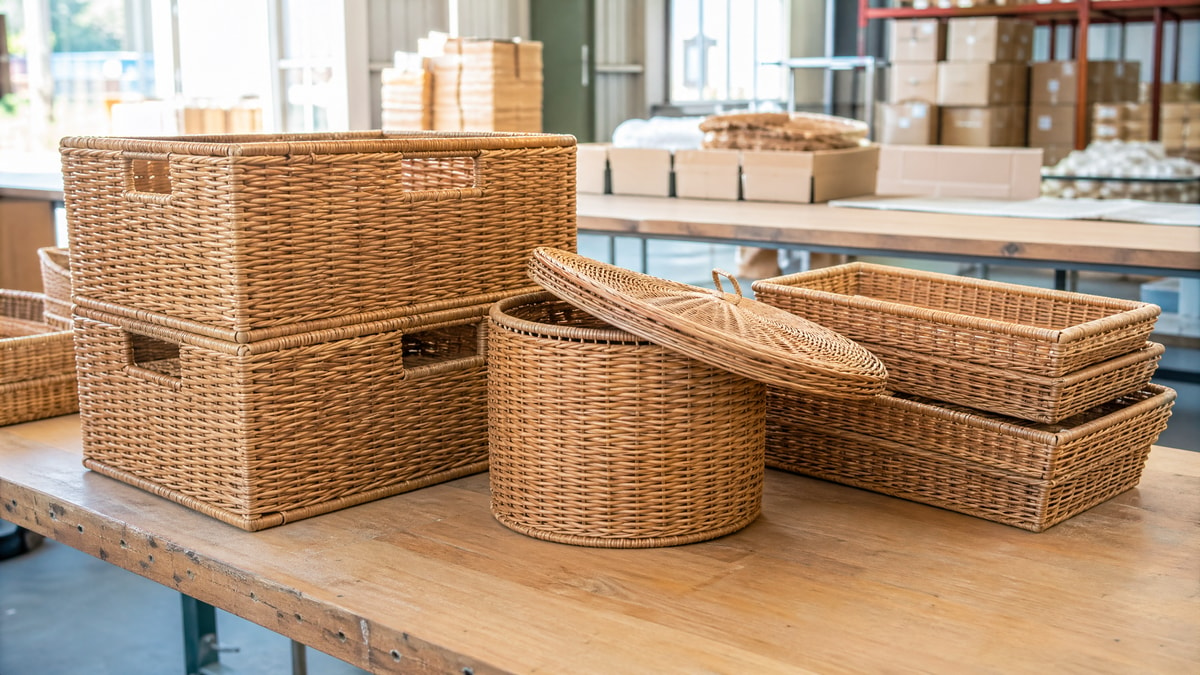
In Willow Weaving for home decor, shape retention depends on more than design alone. For quality control and safety professionals, factors such as moisture balance, material grade, weaving density, drying conditions, and storage environment can all influence long-term stability. Understanding these variables helps reduce deformation risks, improve product consistency, and support better sourcing and compliance decisions across decorative consumer goods.
Why does Willow Weaving lose shape in real-world supply chains?
For buyers and compliance teams in consumer goods, shape retention in Willow Weaving is rarely a single-point issue. A basket, tray, lamp shade, or wall accessory may pass visual inspection at packing stage, then deform after 2–4 weeks in humid storage or during cross-border transit. That gap between factory appearance and in-market performance is where most disputes begin.
Willow is a natural material. Its fiber structure reacts to moisture absorption and release, especially when processing control is inconsistent. If the raw rods are too wet during weaving, the product may shrink after drying. If they are too dry, the material may crack, spring outward, or fail to hold tension evenly. For quality control personnel, this means shape stability must be reviewed across the full process, not only at final assembly.
In home decor categories, acceptable tolerance often varies by function. A decorative shallow tray may allow minor variation, while a lidded storage basket, planter cover, or nested set usually requires tighter dimensional consistency, such as a practical tolerance band of around ±3 mm to ±8 mm depending on size and shape. The risk rises when products are stacked, compressed, or stored for more than 30 days before retail placement.
TrendNest Daily tracks these issues because they directly affect sourcing efficiency, product claims, returns, and channel reliability across small commodities and household goods. For professionals managing export-oriented decorative items, Willow Weaving should be assessed as both a design product and a variable natural-material system.
- Raw material variability: rod diameter, age, bark condition, and harvest season can change bending behavior.
- Process variability: soaking time, weaving tension, mold use, and drying sequence influence final geometry.
- Post-production variability: carton pressure, container humidity, and warehouse temperature shifts can distort shape after packing.
Which technical factors most affect shape retention in Willow Weaving?
When teams evaluate Willow Weaving for home decor, five technical factors usually determine whether the item keeps its form over a 3–6 month circulation cycle: material grade, moisture level, weave density, frame support, and drying control. Ignoring even one of these can create instability that only becomes visible after shipping, shelf storage, or seasonal climate change.
1. Material grade and rod uniformity
Willow rods with uneven diameter create uneven bending resistance. In round or oval products, this often causes one side to relax faster than the other. For QC teams, a practical checkpoint is to sort rods into narrow diameter bands before weaving. Mixed-grade material may lower input cost, but it raises the chance of asymmetry and edge warping.
2. Moisture balance during forming
Most weaving workshops recondition willow before use, but timing matters. Over-soaked rods may look flexible yet lose dimensional stability during drying. Under-conditioned rods may resist shaping and create stress points. In many workshops, short soaking windows of several hours are used for thin materials, while thicker rods may require longer conditioning. What matters is consistency and documented handling, not a one-size-fits-all time rule.
3. Weaving density and structural tension
Loose weaving can shift during transit, especially on open-top baskets and broad trays. Overly tight weaving may look neat at first but can pull the frame out of alignment as the fibers settle. A stable product usually shows balanced spacing, even edge pressure, and no obvious torque across the base. For repetitive production, comparing 3–5 samples per batch can reveal whether operator tension is drifting.
The table below summarizes the most common shape-retention variables in Willow Weaving and how quality personnel can assess them during incoming inspection and pre-shipment review.
This table shows why Willow Weaving quality control should combine visual, dimensional, and process-based checks. A product may look handmade and attractive, yet still carry a high probability of deformation if drying or moisture control was rushed to meet a shipment deadline.
How should QC and safety teams inspect Willow Weaving before shipment?
A practical pre-shipment approach should cover at least 4 steps: dimensional verification, structural feel test, environmental review, and packaging assessment. This is especially important for retailers, importers, and distributors handling mixed assortments of baskets, storage items, and decorative accessories within one order.
Recommended inspection workflow
- Measure key dimensions on a defined sample size, such as top opening, base width, height, and diagonal alignment for 5–13 units per lot segment, depending on batch size.
- Check deformation under light handling pressure. If the side wall collapses too easily or rebounds unevenly, the weave may be under-tensioned.
- Review drying and storage records from the workshop. Items packed too soon after forming are more likely to deform inside sealed cartons.
- Assess carton fit and stacking pressure. Compression over 2–3 layers of nested products can alter rims and corners during long transit.
Safety teams should also look beyond shape alone. Splinters, protruding ends, unstable handles, coatings, dyes, and attached accessories can all affect product safety in household use. For decorative goods sold across multiple markets, screening for general chemical and physical compliance expectations may be necessary, especially if paint, textile lining, adhesive labels, or metal frames are involved.
If the item is intended for indoor use only, packaging and labeling should avoid suggesting unsupported functions such as heavy load carrying, outdoor weather resistance, or direct food contact unless validated. This protects both safety positioning and post-sale claim management.
Key inspection points that are often missed
- Rim roundness after 24-hour rest outside packaging, not just immediately after unpacking.
- Base flatness on hard surfaces, especially for trays and planter covers.
- Handle symmetry and anchoring consistency across left and right sides.
- Odor or residual dampness, which can indicate incomplete drying and later mold risk.
What should buyers compare when sourcing Willow Weaving for stable home decor performance?
Procurement decisions often focus on appearance, price, and lead time. However, for Willow Weaving intended for repeatable retail programs, shape retention deserves equal weight. A lower unit price may create higher landed cost if repacking, returns, markdowns, or customer complaints rise after seasonal humidity changes. For many B2B buyers, the most effective approach is to compare suppliers on process control rather than sample beauty alone.
Lead time is another pressure point. In peak export periods, decorative goods may move from workshop to container within 7–15 days. If drying, conditioning, and resting time are compressed, the risk of deformation increases. This makes production planning a sourcing issue, not just a factory issue.
The comparison table below can help quality managers and sourcing teams align on the right evaluation criteria before placing volume orders for Willow Weaving products.
For category managers, this kind of comparison is especially useful when balancing handmade aesthetics with retail consistency. TrendNest Daily’s cross-sector coverage helps buyers connect decorative material risks with broader supply chain decisions, including packaging, channel requirements, and export timing.
Common mistakes, compliance concerns, and FAQ for Willow Weaving
Many shape problems in Willow Weaving are not discovered because the wrong checks are performed at the wrong time. Teams may inspect directly after unpacking, measure only one opening dimension, or approve samples made under non-standard workshop conditions. These shortcuts save hours but create avoidable claim risk later.
From a compliance angle, shape retention intersects with safe use. A misshapen planter cover may tip more easily. A deformed storage basket may expose sharp cut ends. A warped tray may not sit flat on household surfaces. If coatings, dyes, linings, or hardware are added, general consumer goods safety review becomes even more relevant.
For international trade teams, documentation should clearly define intended use, dimensional tolerance, inspection timing, and packaging method. Clear specs reduce disagreements between supplier, importer, and distributor, especially on handcrafted categories where visual acceptance can otherwise remain subjective.
FAQ: How can teams reduce deformation complaints?
How long should Willow Weaving rest before final packing?
There is no universal number for every product, but allowing a controlled resting period after forming and drying is a common good practice. The exact time depends on item size, weave density, climate, and whether the product includes lining or coating. What matters most is that the supplier applies a repeatable process and packs only after the form has stabilized.
Which home decor items are most sensitive to shape change?
Wide-rim baskets, shallow trays, lidded boxes, and nested sets are among the most sensitive because even small distortion becomes visible or affects fit. Tall narrow forms can also lean if base rigidity is weak. These items deserve tighter pre-shipment checks than loosely styled decorative bins.
Is tighter weaving always better for Willow Weaving stability?
No. Over-tight weaving can create stored stress that pulls the frame out of shape during drying or transport. The goal is balanced tension, not maximum tension. That is why sample comparison across 3–5 units is often more useful than judging one showcase piece.
What should be written into purchase specifications?
Include at least 5 key items: intended use, key dimensions and tolerances, material description, inspection method, and packaging requirements. If the product includes added components, also define attachment security, labeling, and any required compliance review for the target market.
Why choose us for sourcing insight and decision support?
TrendNest Daily supports professionals who need more than trend headlines. For Willow Weaving and related home decor categories, we connect material behavior, supplier practices, retail requirements, and trade realities into decision-ready information. That is useful for QC managers reviewing defect risk, safety teams screening use-related issues, and sourcing teams comparing suppliers under time and budget pressure.
Because our coverage spans small commodities, household goods, personal care packaging-adjacent trends, and cross-border supply chain developments, readers can evaluate decorative product choices within a wider consumer goods context. This matters when shape retention is linked not only to craftsmanship, but also to packaging strategy, channel standards, seasonal demand windows, and export execution.
If you are evaluating Willow Weaving programs, you can contact us for practical guidance on parameter confirmation, supplier comparison points, common deformation risks, packaging review, typical lead-time considerations of 2–6 weeks, sample assessment priorities, and market-facing product positioning. We can also help you frame better questions for factories before quotation and before final shipment approval.
For teams preparing new assortments or troubleshooting existing claims, reach out with your product type, target market, expected order volume, and inspection concerns. That makes it easier to discuss fit-for-purpose selection, tolerance expectations, sample support needs, and how Willow Weaving can perform more consistently across real consumer goods supply chains.
Industry Global
Related News
- 00
0000-00
How to Shortlist a Home Decor Manufacturer for Export Projects - 00
0000-00
Fragrance Wholesale in 2026: What Buyers Need to Know Before Importing - 00
0000-00
How to Choose an Aroma Diffuser for Home Based on Room Size - 00
0000-00
How to Pick Decorative Items for Office Without Making It Look Cluttered - 00
0000-00
Home Styling Tips That Make Small Spaces Feel More Put Together
Weekly Insights
Stay ahead with our curated technology reports delivered every Monday.
Related News
 How to Shortlist a Home Decor Manufacturer for Export ProjectsHome Decor manufacturer guide: learn how to shortlist export-ready partners for Home Fragrance diffuser, Decorative Items for office, and custom gifts for corporate with less sourcing risk.
 Fragrance Wholesale in 2026: What Buyers Need to Know Before ImportingFragrance wholesale in 2026: learn how to evaluate Home Fragrance diffuser, Aroma Diffuser for home, Scented Candles custom, and Essential Oils for relaxation before importing.
 How to Choose an Aroma Diffuser for Home Based on Room SizeAroma Diffuser for home guide by room size: compare Home Fragrance diffuser types, Reed Diffuser benefits, Essential Oil Diffuser price, and Aromatherapy Oils for sleep to choose the best fit.
 How to Pick Decorative Items for Office Without Making It Look ClutteredDecorative Items for office made simple: discover Home Styling tips, smart office supplies bulk order ideas, and sourcing advice from a Home Decor manufacturer for a clean, professional workspace.