Can the right Fragrance for office boost concentration without triggering employee complaints? For business decision-makers, scent is no longer just an atmosphere enhancer—it can influence comfort, productivity, and brand perception in shared workplaces. This article explores how to choose office-friendly fragrance strategies that support focus, respect diverse sensitivities, and align with practical workplace management goals.
Why is Fragrance for office becoming a management issue rather than just a design choice?
For many companies, workplace scent used to sit under interior styling, reception image, or hospitality. That view is changing. In open-plan offices, meeting rooms, and shared workstations, scent can affect concentration, perceived cleanliness, mood stability, and even how long people feel comfortable staying in a space. For decision-makers managing teams of 20, 200, or 2,000 people, Fragrance for office has moved from a decorative detail to an operational factor.
The reason is practical: offices are mixed-sensitivity environments. What feels refreshing to one employee may feel distracting or irritating to another. A successful scent program therefore needs to balance three goals at once: support focus, avoid complaints, and fit the company’s facility budget and maintenance routine. In most workplaces, the target is not a strong aroma but a low-intensity ambient profile that remains noticeable only within a short range of about 1 to 3 meters.
This matters across multiple sectors covered by consumer goods and personal care supply chains. Suppliers of fragrance oils, diffusion devices, air-care consumables, and small electrical scent systems increasingly serve B2B offices, showrooms, and customer-facing service points. For buyers and brand operators, the choice is no longer simply “use scent or not,” but “what scent level, delivery method, refill cycle, and risk policy make sense for this workplace?”
What business outcomes are companies actually trying to influence?
Most organizations are not trying to create a luxury hotel effect. They are usually pursuing more modest outcomes: reducing stale-air perception, improving first impressions in reception zones, creating consistency across branches, and supporting calm attention in desk-based environments. In a standard 8-hour workday, even a subtle environmental factor can shape comfort levels over repeated exposure.
- Improve perceived air freshness in high-traffic zones such as entrances, corridors, and shared meeting rooms.
- Support focused work by avoiding overly sweet, heavy, or stimulating scent profiles.
- Strengthen brand perception for visitors, partners, and candidates during short stays of 10 to 60 minutes.
- Create a controlled, repeatable ambience without relying on staff to manually spray or adjust products.
When framed this way, Fragrance for office becomes comparable to lighting temperature, acoustic treatment, or HVAC tuning: a small environmental input with measurable effects on workplace experience and complaints management.
What kind of Fragrance for office is most likely to support focus?
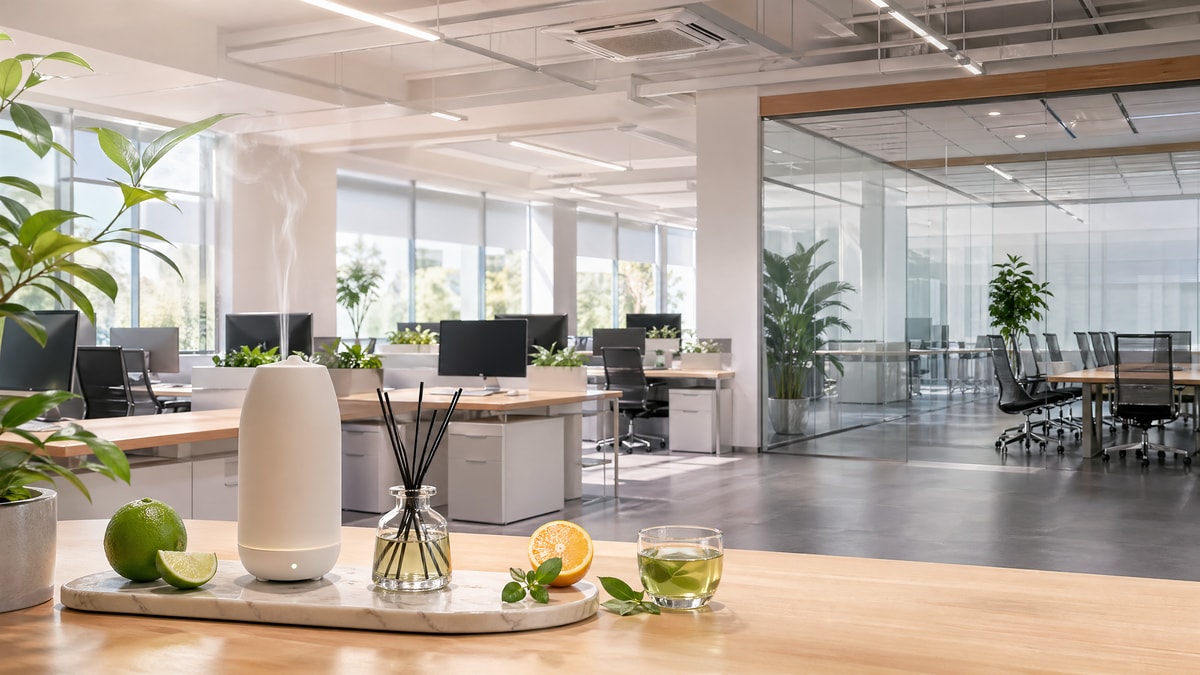
The best scent for concentration is usually clean, light, and stable rather than bold. In practice, office-friendly fragrance families often include soft citrus, green tea, light herbal, airy floral, and subtle woody notes. The key is restrained diffusion. Even a well-liked fragrance can become a problem if intensity is too high for more than 30 to 45 minutes in a closed room.
Many workplace buyers make the mistake of selecting a scent based on retail popularity rather than environmental suitability. A fragrance that works well in personal care or home use may not perform well in a shared workspace. Offices require lower sweetness, lower oiliness, and lower persistence on soft furnishings. Fragrance for office should feel integrated into the environment, not dominant over it.
Another useful principle is zoning. A single company may need different scent strategies for reception, breakout areas, washrooms, and focused work areas. A fragrance that feels energizing in a lobby may feel intrusive near analysts, designers, or customer support teams handling repetitive tasks for 6 to 8 hours daily.
Which fragrance profiles tend to work best by office area?
The table below offers a practical comparison for decision-makers evaluating fragrance categories, intensity, and use zones before procurement or pilot testing.
The comparison shows that “best” Fragrance for office depends on dwell time, airflow, and task type. Areas where employees remain for 4 hours or more generally require lower intensity than visitor-facing zones with short occupancy periods.
What notes are more likely to trigger complaints?
Heavy gourmand, strong musk, dense amber, sharp synthetic fruit, and powdery floral accords tend to create more mixed reactions in shared offices. These profiles may feel too personal, too cosmetic, or too persistent. If the goal is concentration, avoid fragrances that linger strongly on fabrics or remain obvious after ventilation cycles of 20 to 30 minutes.
How can companies reduce complaints before rolling out a fragrance program?
The safest approach is to treat Fragrance for office as a pilot-managed environmental change. Instead of installing a building-wide solution immediately, test in one zone for 2 to 4 weeks, gather employee feedback, and review any complaints related to headaches, distraction, or discomfort. This reduces waste and gives facilities teams a realistic view of maintenance needs.
Communication also matters. Employees react more positively when they understand the intent and control process. A short internal note can explain where scent will be used, why intensity will remain low, and how staff can report concerns. For workplaces with known sensitivities, fragrance-free zones should remain available. That is especially relevant in hybrid offices where occupancy patterns shift by day and room density can change by 30% to 50%.
Ventilation quality should be checked before scent deployment. Fragrance should not be used to mask poor air circulation, pantry odors, or cleaning chemical residue. If HVAC performance is weak, complaints may increase because scent compounds accumulate unevenly. In such cases, the root issue is air management, not product selection alone.
What should decision-makers evaluate during a pilot?
A structured review helps avoid subjective decisions. The checklist below is useful for procurement teams, workplace managers, and brand operators assessing Fragrance for office solutions from multiple suppliers.
- Diffusion range: Is the effective coverage suitable for 15 square meters, 50 square meters, or a larger zone?
- Refill cycle: Does the consumable typically last 30, 45, or 60 days at low output settings?
- Noise level: Is the device quiet enough for meeting rooms and focused work areas?
- Control method: Can timing and intensity be adjusted by hour, occupancy pattern, or weekday?
- Complaint threshold: How many negative responses appear during the first 2 weeks relative to total users in the zone?
This kind of pilot framework is especially useful for companies sourcing across consumer goods channels, where products may look similar online but differ significantly in diffusion stability, refill consistency, and after-sales support.
What are the main differences between delivery methods for Fragrance for office?
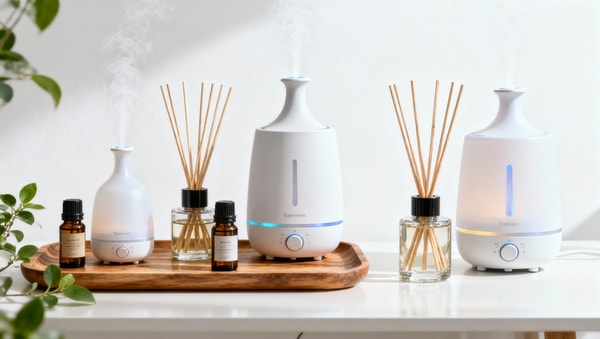
The delivery method influences not only scent quality but also maintenance cost, safety, and user acceptance. Common office options include passive reeds, timed aerosol units, ultrasonic diffusers, and cold-air or nebulizing systems. Each has trade-offs in coverage, precision, and perceived cleanliness. For larger commercial environments, controlled diffusion usually performs better than manual spraying because output can be standardized across time blocks.
For enterprise buyers, the best choice depends on room size, staffing, and how visible the device should be. In premium reception areas, aesthetics may matter. In back-office spaces, consistency and low intervention often matter more. Small home appliance suppliers and air-care manufacturers serving B2B channels should present solutions in terms of operating schedule, refill burden, and scent dispersion control rather than lifestyle language alone.
The table below compares practical procurement considerations across common systems.
For most office deployments, the decision should align with the desired control level. If complaints prevention is a priority, systems with adjustable output windows and lower peak bursts are generally easier to manage than products that release scent in sudden intervals.
Is low-cost always better for trial programs?
Not necessarily. A cheaper device may create inconsistent diffusion, leading managers to misjudge the fragrance itself. In trial settings, consistency is more valuable than minimum unit price. A 30-day pilot that produces stable scent intensity offers better decision data than a low-cost option with uneven performance.
What mistakes cause Fragrance for office complaints most often?
The most common mistake is over-scenting. Decision-makers sometimes assume employees will only notice the benefit if the fragrance is obvious. In reality, complaint risk rises sharply when scent competes with attention. If workers can clearly identify the fragrance name from their desks after prolonged exposure, the setting is probably too strong for daily office use.
Another mistake is copying hospitality scenting into task-oriented environments. Hotels, retail stores, and spas often use stronger signatures because visitor dwell time is shorter and emotional impact is part of the experience. Offices are different. Repetitive work, calls, screens, and long meetings require lower sensory load. Fragrance for office should support neutrality first and brand tone second.
A third issue is poor governance. If nobody owns refill timing, intensity settings, or employee feedback handling, even a suitable fragrance can become inconsistent. Facility teams should define review points at 2 weeks, 6 weeks, and 12 weeks after launch, then adjust according to season, occupancy, and ventilation changes.
Quick FAQ: what should companies do in common situations?
The summary below helps teams respond to the most frequent implementation questions.
This FAQ pattern shows that complaints often come from execution mismatch rather than from fragrance use alone. With the right controls, Fragrance for office can remain subtle, useful, and low-risk.
How should business buyers choose suppliers and plan implementation?
For procurement and operations teams, supplier selection should cover more than fragrance samples. Ask about coverage range, refill lead time, consumable compatibility, maintenance training, and whether trial quantities are available. In B2B settings, a workable solution often depends as much on service reliability as on scent preference. A typical review cycle may include sample confirmation in 3 to 7 days, pilot setup in 1 to 2 weeks, and performance evaluation after the first month.
It is also wise to request a small decision matrix before rollout. This can map fragrance profile, diffusion method, target zone, refill cycle, and sensitivity safeguards. For companies managing multiple branches or export-oriented offices with frequent visitors, consistency across locations matters. At the same time, local climate, room density, and ventilation differences may require adjustments instead of a one-size-fits-all plan.
Trend-sensitive sectors such as personal care, beauty, household appliances, and small consumer goods can also use office scenting as a soft signal of product positioning. Still, internal comfort should remain the first filter. A fragrance that aligns with brand tone but increases staff complaints is not an efficient business choice.
What should you confirm before moving forward?
- Which zones need Fragrance for office, and which zones should stay fragrance-free?
- What coverage, refill interval, and device maintenance level fit your facility team?
- How will feedback be collected during the first 30 days and after seasonal changes?
- Do you need sample support, alternate fragrance options, or adjustable output settings before a wider rollout?
- What lead time and replenishment model can the supplier realistically support for one site or multiple locations?
Why choose us
TrendNest Daily helps business decision-makers track practical developments across fragrance, personal care, air-care products, small appliances, and related consumer goods supply chains. If you are comparing Fragrance for office options, evaluating suppliers, or planning a pilot for reception areas, workspaces, or multi-site offices, we can help you organize the right questions before procurement.
Contact us to discuss product selection, diffusion methods, coverage parameters, refill cycles, sample support, customization direction, delivery timing, and quotation planning. If your team needs a clearer view of market options, sourcing logic, or category trends connected to office scent solutions, we can support that evaluation with a practical, industry-focused perspective.
Industry Global
Related News
- 00
0000-00
How to Shortlist a Home Decor Manufacturer for Export Projects - 00
0000-00
Fragrance Wholesale in 2026: What Buyers Need to Know Before Importing - 00
0000-00
How to Choose an Aroma Diffuser for Home Based on Room Size - 00
0000-00
How to Pick Decorative Items for Office Without Making It Look Cluttered - 00
0000-00
Home Styling Tips That Make Small Spaces Feel More Put Together
Weekly Insights
Stay ahead with our curated technology reports delivered every Monday.
Related News
 How to Shortlist a Home Decor Manufacturer for Export ProjectsHome Decor manufacturer guide: learn how to shortlist export-ready partners for Home Fragrance diffuser, Decorative Items for office, and custom gifts for corporate with less sourcing risk.
 Fragrance Wholesale in 2026: What Buyers Need to Know Before ImportingFragrance wholesale in 2026: learn how to evaluate Home Fragrance diffuser, Aroma Diffuser for home, Scented Candles custom, and Essential Oils for relaxation before importing.
 How to Choose an Aroma Diffuser for Home Based on Room SizeAroma Diffuser for home guide by room size: compare Home Fragrance diffuser types, Reed Diffuser benefits, Essential Oil Diffuser price, and Aromatherapy Oils for sleep to choose the best fit.
 How to Pick Decorative Items for Office Without Making It Look ClutteredDecorative Items for office made simple: discover Home Styling tips, smart office supplies bulk order ideas, and sourcing advice from a Home Decor manufacturer for a clean, professional workspace.