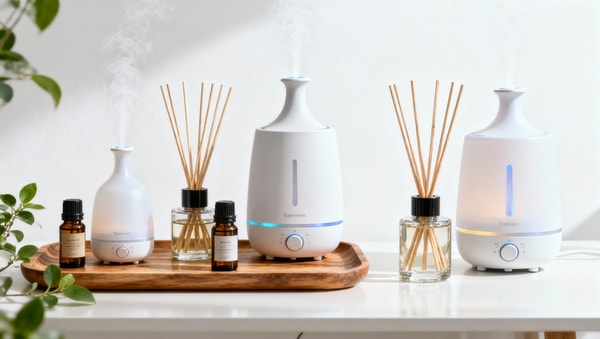
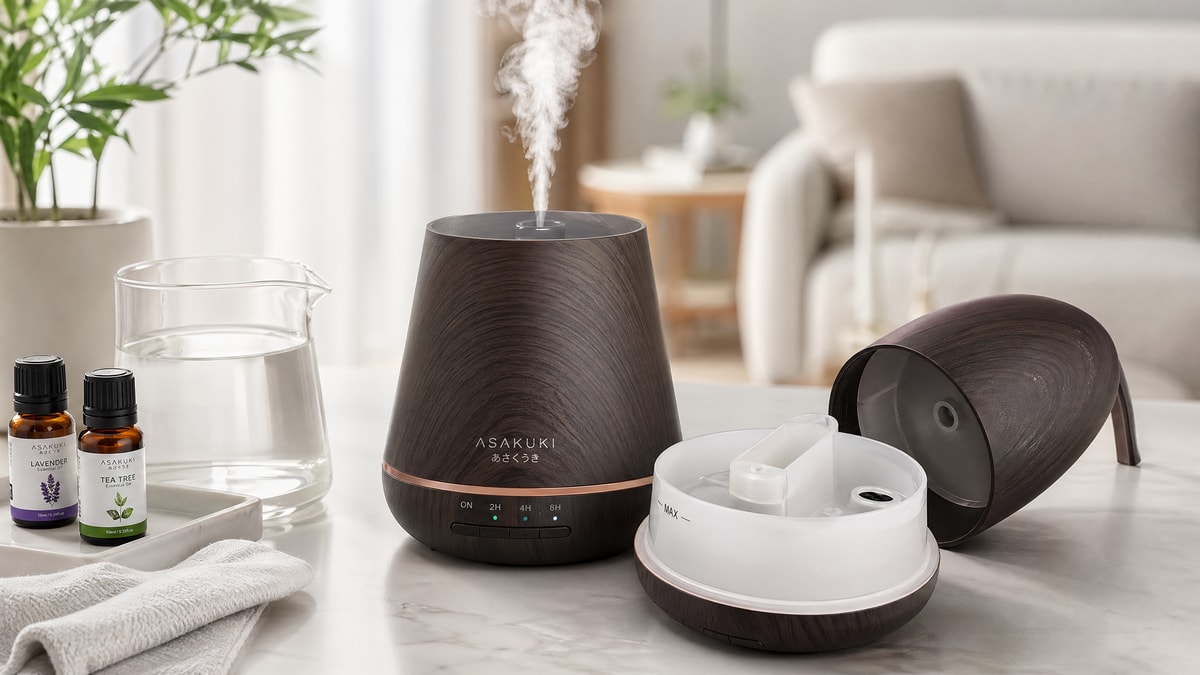
Essential Oil Diffuser ultrasonic units are often praised for quiet mist output and user-friendly design, yet one overlooked issue can seriously affect performance: improper cleaning. For after-sales maintenance teams, understanding residue buildup, water tank contamination, and customer misuse is key to reducing repeat complaints and extending product life. This article explores the cleaning problems many users ignore and why they matter in real service scenarios.
A clear shift is happening: service complaints are moving from hardware failure to maintenance-related performance loss
In the small home appliance and personal care goods market, Essential Oil Diffuser ultrasonic products are no longer treated as novelty items. They are now routine consumer devices sold across online retail, gift channels, beauty shops, and export-focused home goods lines. As product penetration increases, after-sales teams are seeing a practical change: many returns that appear to be “mist failure” or “noise issues” are actually linked to neglected cleaning cycles, oil residue, mineral scale, or microbial buildup inside the tank and atomizing area.
This shift matters because the service burden changes with it. A maintenance technician who previously focused on power boards, water level sensors, or transducer replacement now needs stronger judgment on usage behavior. In many routine service cases, the root cause appears within 2 to 8 weeks of heavy use, especially when users run the diffuser daily, leave water standing overnight, or use dense fragrance blends that are not suited to standard ultrasonic atomization chambers.
For industry participants following consumer goods trends, this is not a minor detail. It affects complaint rates, spare parts consumption, warranty handling time, and brand reputation. In export and distribution channels, a product that performs well in testing can still generate repeat claims if the cleaning guidance is weak or if the reservoir design makes residue hard to remove.
Why the trend is becoming more visible
Several market signals explain the rise in cleaning-related issues. First, product usage frequency is increasing. Many households now run diffusers for 4 to 10 hours per day rather than occasional weekend use. Second, fragrance oil variety has expanded, including thicker blends, color-added oils, and formulas with botanical particles. Third, low-maintenance marketing language has sometimes led end users to assume that weekly cleaning is optional rather than essential.
- Higher daily runtime increases water evaporation and accelerates residue concentration on atomizing plates.
- Hard water in many markets leaves visible scale within 7 to 14 days if tanks are not wiped and dried.
- Cross-border product distribution often means user instructions are simplified, reducing maintenance compliance.
- Compact decorative designs may improve shelf appeal but make the inner chamber harder to inspect and clean.
For after-sales maintenance teams, the implication is clear: technical failure diagnosis now depends more on residue pattern recognition, customer education, and quick classification of maintenance neglect versus component failure.
The cleaning issue users ignore is not one problem but a chain of small failures
In an Essential Oil Diffuser ultrasonic unit, cleaning neglect does not usually damage performance all at once. It creates a chain reaction. Oil film forms on the tank wall and mist outlet. Mineral scale accumulates on the ultrasonic plate. Stagnant water supports odor development. If the fan path is exposed to moisture over time, airflow efficiency can also decline. The user sees weak mist, intermittent operation, or an unusual smell and assumes the product is defective.
The service challenge is that these symptoms can overlap with real component issues. Reduced mist can indicate a worn transducer, but it can also result from a thin residue layer only a few cleaning cycles thick. A unit that shuts off early may have a sensor problem, but it may also be reacting to contamination around the float or probe area. Fast and accurate separation of these causes saves labor time and avoids unnecessary part replacement.
The table below summarizes common cleaning-related faults seen in field service and how they differ from true hardware failure patterns.
For maintenance personnel, this classification reduces guesswork. A structured cleaning-first inspection can often shorten initial diagnosis from 20 to 30 minutes down to a more manageable service routine, especially in high-volume support environments.
What customers commonly do wrong
Customer misuse is usually repetitive rather than extreme. Many users refill without emptying old water, mix multiple oils without rinsing, or wipe only the visible tank wall while ignoring the atomizing plate and air outlet path. Some also use tap water with high mineral content despite product instructions suggesting filtered or clean water in normal conditions.
Typical neglect points after-sales teams should ask about
- Whether the tank is emptied after every use or water remains for more than 24 hours.
- Whether cleaning is done every 3 to 7 days under daily operation.
- Whether the user adds more than the recommended oil drops per fill volume.
- Whether cotton swabs or soft tools are used on the plate instead of abrasive tools.
These questions help frame a complaint correctly and can prevent unnecessary exchanges that increase logistics cost across retail and cross-border channels.
Design, oil formulation, and market expansion are all driving the problem
The increase in cleaning-related service events is not only a user education issue. It also reflects broader product and market changes. As Essential Oil Diffuser ultrasonic models become more decorative, compact, and gift-oriented, some internal structures become less accessible for wiping and drying. A stylish water tank shape may look premium on retail shelves but create corners where residue collects after repeated use.
At the same time, product lines now serve a wider range of oils and fragrance habits. In the beauty and personal care ecosystem, users often expect one device to handle light essential oils, blended aromas, and seasonal fragrances. That expectation is not always realistic. The more varied the liquid profile, the more likely maintenance outcomes will differ between users even when the same model is sold through the same distribution channel.
The following table shows how several market-side changes are affecting service expectations and cleaning risk.
This trend is especially relevant for distributors and manufacturers covered by industry news platforms such as TrendNest Daily, because it sits at the intersection of product innovation, channel expansion, and after-sales cost control. Cleaning difficulty is no longer just a user issue; it is now a product planning and service design issue.
A wider business impact than many teams expect
When maintenance neglect is misread as product defect, the cost spreads across the chain. Brands absorb higher return rates, distributors face preventable inventory write-downs, and service teams waste spare parts on avoidable replacements. Even a modest increase in repeat claims per 100 units can affect support capacity during seasonal demand peaks.
For export-oriented businesses, this can also influence channel trust. Buyers increasingly ask not only about mist volume or tank capacity, but also about cleaning access, service instruction quality, and expected maintenance intervals. That is a sign that the market is becoming more mature and more operationally demanding.
What after-sales maintenance teams should change in diagnosis and communication
The first priority is to standardize intake questions. A good service workflow for an Essential Oil Diffuser ultrasonic complaint should collect at least 5 basic facts before technical disassembly: runtime per day, water type, oil type, cleaning interval, and symptom timing. This often reveals whether the issue emerged after 3 days, 2 weeks, or 2 months, which is highly useful when separating contamination from component fatigue.
The second priority is to adopt a cleaning verification step before major parts replacement. In many service centers, a controlled clean-and-retest process can be completed in one routine handling cycle. This is especially valuable when support teams are processing multiple consumer goods categories and need a consistent approach that reduces subjective judgment.
The third priority is customer communication. End users are more likely to follow guidance when instructions are brief, visual, and tied to clear intervals, such as every 3 uses, every 7 days, or after changing oil types. Vague reminders like “clean regularly” are less effective than maintenance triggers linked to normal household behavior.
A practical service checklist
- Inspect the ultrasonic plate for visible scale, oil film, or discoloration before electrical testing.
- Check the water level sensor or float area for sticky residue and partial blockage.
- Confirm whether the user runs the unit with tap water, filtered water, or distilled water where appropriate.
- Ask if multiple fragrance oils were mixed within the same 24 to 72 hour period.
- Document whether odor remains after cleaning, as persistent odor may point to deeper contamination or material absorption.
What to monitor over the next 6 to 12 months
Service teams should watch for three signals. First, whether new models improve cleanability through wider tank openings or easier plate access. Second, whether oil sellers provide clearer compatibility guidance for diffuser use. Third, whether customer support content becomes more preventive, reducing claims before they become warranty cases. These signals will shape the next stage of maintenance workload more than isolated hardware changes alone.
If these improvements do not happen, complaint categories may continue shifting toward low-mist output, odor recurrence, and intermittent function reports that consume service time without reflecting actual manufacturing defects.
Why this matters now for sourcing, product planning, and support strategy
The cleaning issue around Essential Oil Diffuser ultrasonic devices should now be treated as a market-readiness factor, not just a service footnote. For manufacturers and buyers, cleanability affects user satisfaction as much as noise level, mist mode, or LED features. For after-sales maintenance teams, it directly influences labor efficiency, complaint accuracy, and whether a product line remains manageable once sales volume increases.
This is also where broader consumer goods trends meet operational reality. A diffuser that looks attractive and sells well can still underperform in the field if tank geometry, usage instructions, and oil compatibility are not aligned. In a market where everyday goods, beauty-adjacent appliances, and export channels move quickly, teams that identify these maintenance signals early are better positioned to reduce preventable costs.
If your business is evaluating diffuser models, warranty risk, or service workflows, the next useful step is not only to compare features. It is to verify cleaning access, recommended maintenance intervals, suitable oil types, and common failure patterns under real use conditions.
Why choose us
TrendNest Daily follows the practical changes shaping small home appliances, personal care devices, and related consumer goods sectors. If you need support in judging how cleaning-related performance issues may affect a diffuser line, we can help you focus on the details that matter for business decisions.
Contact us to discuss model parameters, cleaning-friendly design points, service risk signals, product selection comparisons, supply chain direction, sample evaluation focus, delivery cycle expectations, and market-facing maintenance guidance. For brands, distributors, buyers, and after-sales teams, these questions are increasingly important before scaling a product category.
Industry Global
Related News
- 00
0000-00
How to Shortlist a Home Decor Manufacturer for Export Projects - 00
0000-00
Fragrance Wholesale in 2026: What Buyers Need to Know Before Importing - 00
0000-00
How to Choose an Aroma Diffuser for Home Based on Room Size - 00
0000-00
How to Pick Decorative Items for Office Without Making It Look Cluttered - 00
0000-00
Home Styling Tips That Make Small Spaces Feel More Put Together
Weekly Insights
Stay ahead with our curated technology reports delivered every Monday.
Related News
 How to Shortlist a Home Decor Manufacturer for Export ProjectsHome Decor manufacturer guide: learn how to shortlist export-ready partners for Home Fragrance diffuser, Decorative Items for office, and custom gifts for corporate with less sourcing risk.
 Fragrance Wholesale in 2026: What Buyers Need to Know Before ImportingFragrance wholesale in 2026: learn how to evaluate Home Fragrance diffuser, Aroma Diffuser for home, Scented Candles custom, and Essential Oils for relaxation before importing.
 How to Choose an Aroma Diffuser for Home Based on Room SizeAroma Diffuser for home guide by room size: compare Home Fragrance diffuser types, Reed Diffuser benefits, Essential Oil Diffuser price, and Aromatherapy Oils for sleep to choose the best fit.
 How to Pick Decorative Items for Office Without Making It Look ClutteredDecorative Items for office made simple: discover Home Styling tips, smart office supplies bulk order ideas, and sourcing advice from a Home Decor manufacturer for a clean, professional workspace.