Shenzhen Customs Launches 'Green Channel' for Personal Care Appliance Exports: ISO 22716 or GMPC-Certified Companies Enjoy 48-Hour Clearance, but Must Submit CE/UKCA Declarations
Introduction
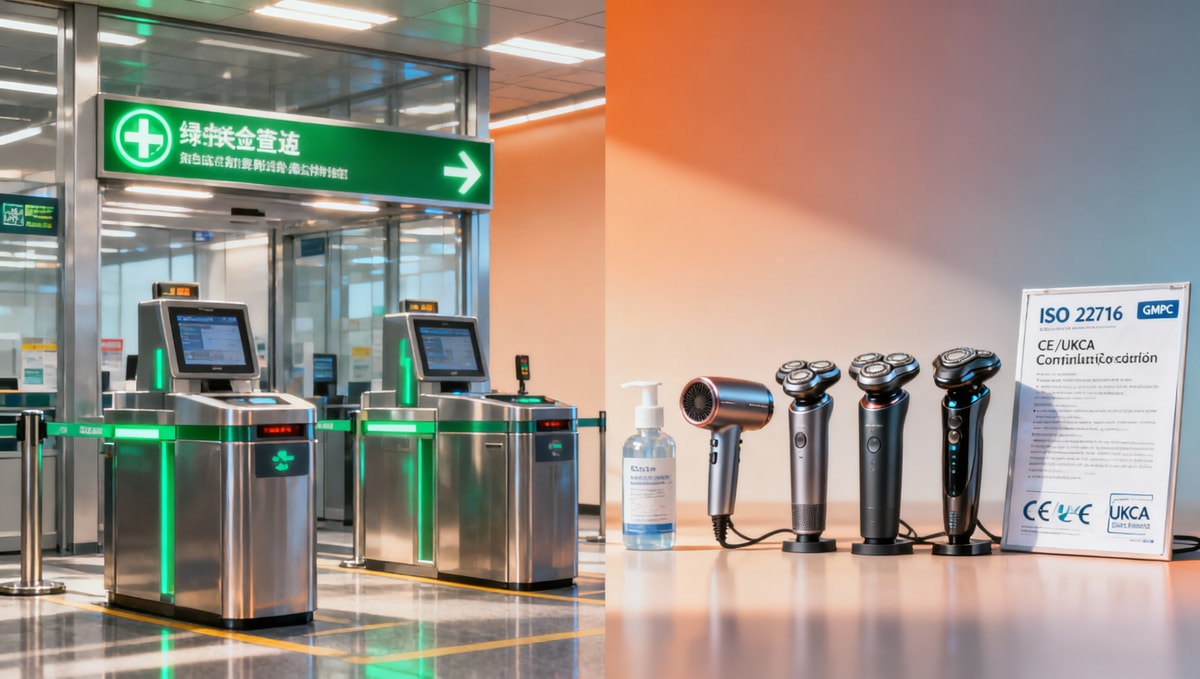
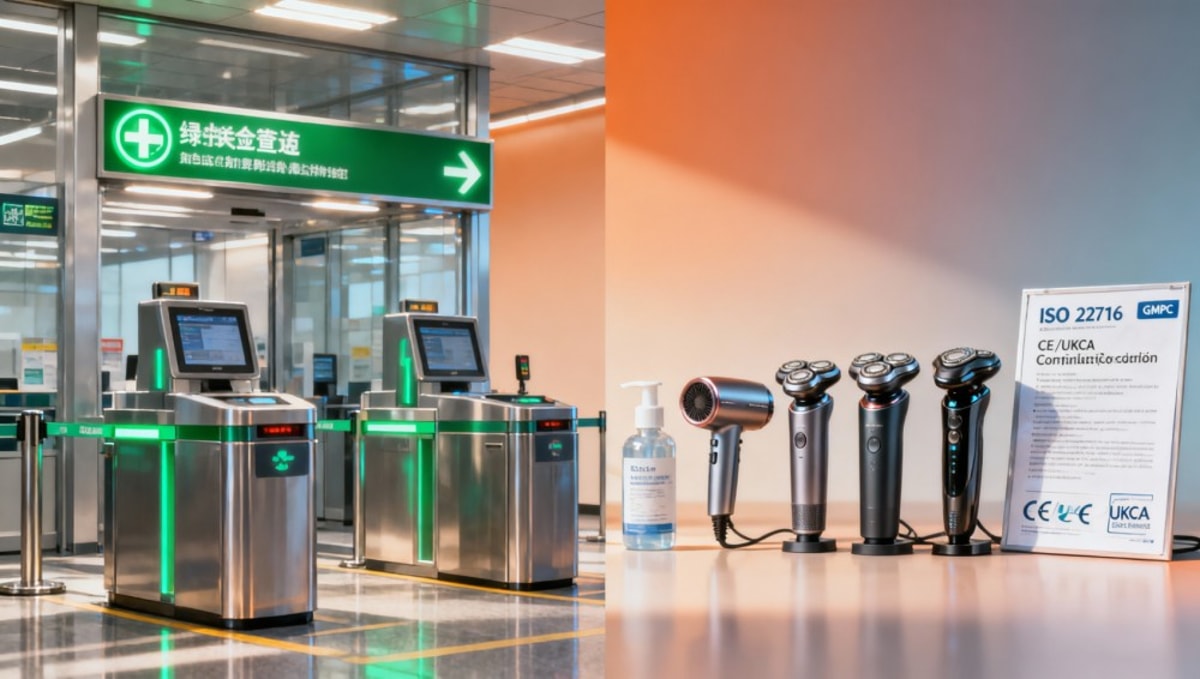
On March 28, 2026, Shenzhen Customs announced the launch of a 'green channel' for personal care appliance exporters holding ISO 22716 (Cosmetic GMP) or GMPC certification, effective April 1. The new policy reduces average clearance time to within 48 hours but mandates simultaneous submission of CE (EU) or UKCA (UK) conformity declarations and technical documentation summaries. This development is particularly relevant for manufacturers, exporters, and supply chain stakeholders in the personal care appliance sector, as it directly impacts trade efficiency and compliance requirements for European and UK markets.
Event Overview
Starting April 1, 2026, Shenzhen Customs will implement expedited clearance (≤48 hours) for personal care appliance exporters certified under ISO 22716 or GMPC. The policy introduces a strict new requirement: exporters must upload CE or UKCA conformity declarations alongside technical documentation summaries during customs declaration. Failure to comply will result in rejection for rectification. European importers may prioritize dual-certified Chinese suppliers to ensure delivery timelines.
Impact on Sub-Sectors
Direct Export Enterprises
Companies shipping personal care appliances (e.g., hair dryers, electric shavers) to the EU/UK will benefit from faster clearance but face stricter documentation scrutiny. Non-compliant shipments risk delays, disrupting just-in-time supply chains.
Certification Service Providers
Demand for ISO 22716/GMPC certification consulting may rise among manufacturers seeking green channel access. However, certification bodies must align with customs' technical documentation standards to avoid client rejections.
European Distributors
EU/UK buyers gain a tangible metric—Shenzhen Customs' green channel eligibility—to vet Chinese suppliers. Dual-certified exporters could leverage this in contract negotiations as proof of compliance efficiency.
Key Action Points for Stakeholders
1. Documentation Preparedness
Exporters should audit their CE/UKCA technical files to ensure summary documents meet Shenzhen Customs' formatting requirements. Proactive alignment prevents last-minute rejections.
2. Certification Strategy
Manufacturers lacking ISO 22716/GMPC certification should evaluate whether pursuing certification (typically 6-12 months) justifies the long-term clearance advantages, especially for high-frequency EU/UK shipments.
3. Supply Chain Communication
Importers should update supplier questionnaires to explicitly ask about green channel eligibility and request sample conformity declarations to verify compliance robustness.
Industry Observations
Analysis suggests this policy reflects China's push to align export compliance with destination market standards. The green channel incentivizes quality upgrades while using customs efficiency as a carrot. Notably, the 48-hour clearance applies only to Shenzhen ports—exporters using other Chinese gateways remain subject to standard procedures. From a market perspective, the policy may accelerate consolidation among certified exporters, as smaller uncertified players face relative competitiveness erosion.
Conclusion
Shenzhen Customs' new measure strategically ties regulatory compliance to trade facilitation, creating a de facto tiered system for personal care appliance exporters. While the immediate operational impact is limited to documentation workflows, the policy signals broader trends: (1) customs increasingly acting as a compliance gatekeeper beyond traditional roles, and (2) certified manufacturers gaining systemic advantages in regulated markets. Stakeholders should treat this as a pilot case for potential replication across other export categories and regions.
Sources
• Shenzhen Customs Official Announcement (March 28, 2026)
• Note: Policy implementation details (e.g., technical document formatting standards) require monitoring of subsequent customs guidelines.
Small Appliance Research Team
Related News
- 00
0000-00
How to Choose an Aroma Diffuser for Home Based on Room Size - 00
0000-00
Ultrasonic Essential Oil Diffuser Problems You Can Fix Fast - 00
0000-00
Why Essential Oil Diffuser Ultrasonic Mist Gets Weak Over Time - 00
0000-00
AI-Powered Small Appliances Dominate Shenzhen Gift Fair - 00
0000-00
AI Small Appliances & Personal Care Devices Spotlighted at Shenzhen Expo
Weekly Insights
Stay ahead with our curated technology reports delivered every Monday.
Related News
 How to Shortlist a Home Decor Manufacturer for Export ProjectsHome Decor manufacturer guide: learn how to shortlist export-ready partners for Home Fragrance diffuser, Decorative Items for office, and custom gifts for corporate with less sourcing risk.
 Fragrance Wholesale in 2026: What Buyers Need to Know Before ImportingFragrance wholesale in 2026: learn how to evaluate Home Fragrance diffuser, Aroma Diffuser for home, Scented Candles custom, and Essential Oils for relaxation before importing.
 How to Choose an Aroma Diffuser for Home Based on Room SizeAroma Diffuser for home guide by room size: compare Home Fragrance diffuser types, Reed Diffuser benefits, Essential Oil Diffuser price, and Aromatherapy Oils for sleep to choose the best fit.
 How to Pick Decorative Items for Office Without Making It Look ClutteredDecorative Items for office made simple: discover Home Styling tips, smart office supplies bulk order ideas, and sourcing advice from a Home Decor manufacturer for a clean, professional workspace.