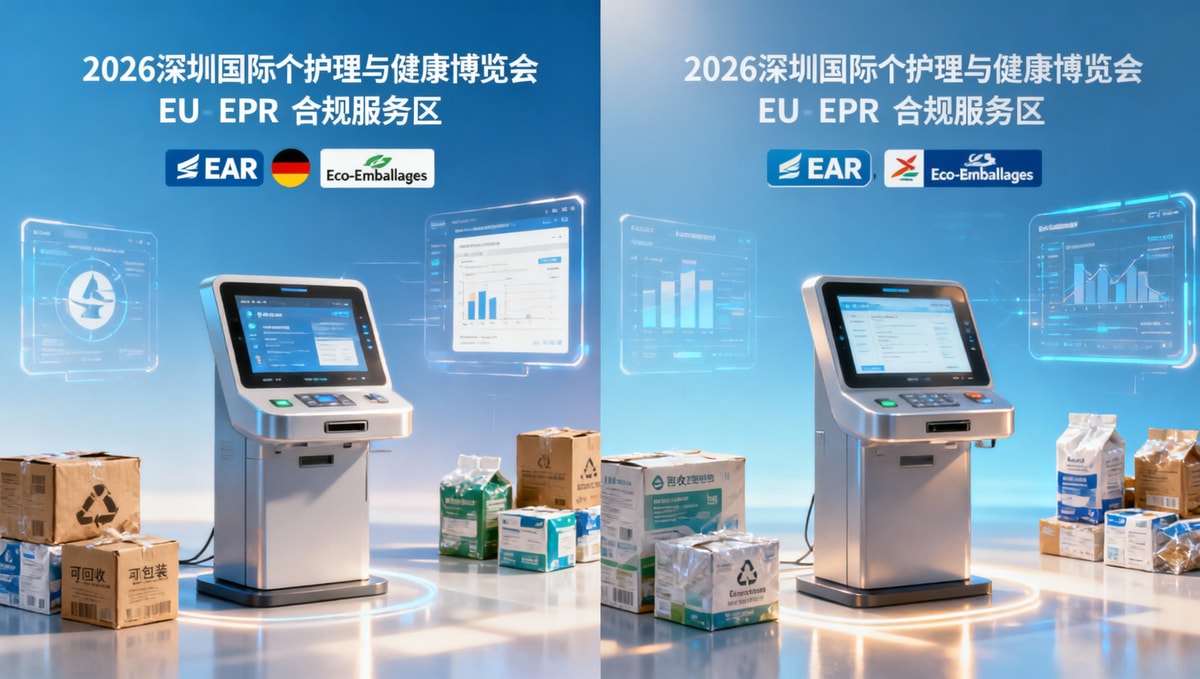
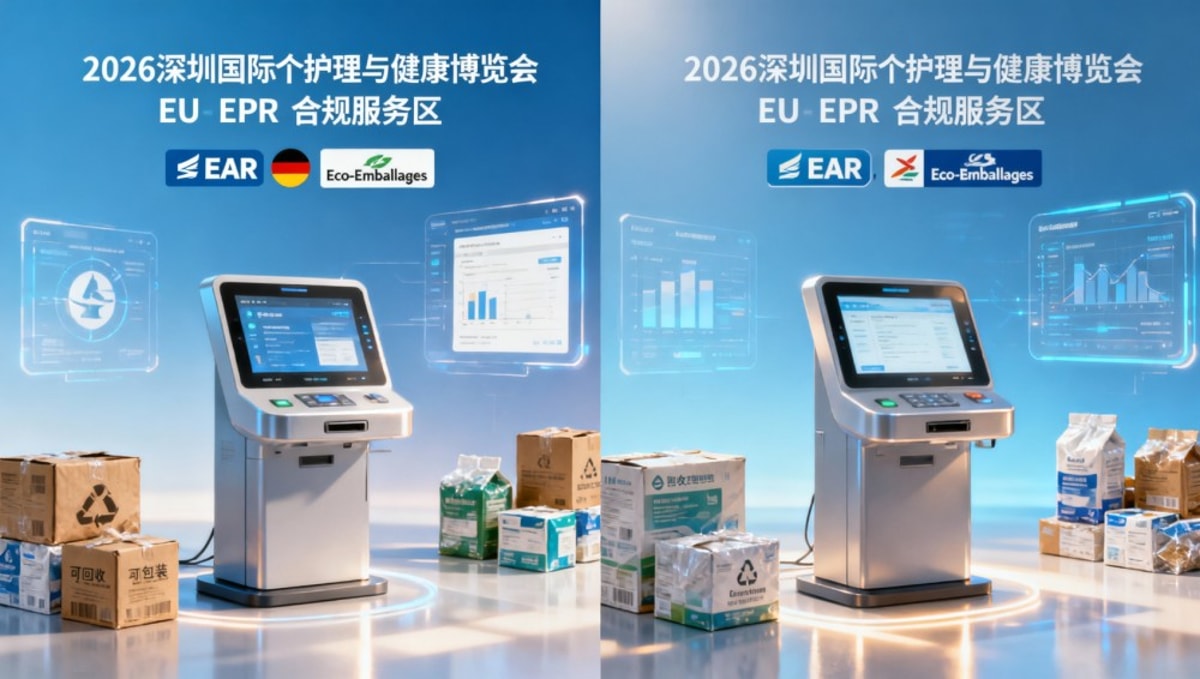
The 2026 Shenzhen (International) Personal Care & Health Lifestyle Exhibition is set to take place from July 17–19 at the Shenzhen Convention and Exhibition Center. Notably, this edition will introduce a dedicated EU EPR (Extended Producer Responsibility) compliance service zone, collaborating with official recycling organizations like Germany’s EAR and France’s Eco-Emballages. The move aims to provide one-stop export support for Chinese personal care brands and OEMs, covering EPR registration, packaging data reporting, and annual report management. Southeast Asian and Middle Eastern buyers have already confirmed group attendance. This development is particularly relevant for cross-border trade enterprises, OEM/ODM manufacturers, and packaging suppliers, signaling a shift toward stricter environmental compliance in key export markets.
Event Overview
The 2026 Shenzhen International Personal Care & Health Expo will feature a first-of-its-kind EU EPR Compliance Service Zone, directly involving authorized entities such as Germany’s EAR and France’s Eco-Emballages. The event targets personal care brands, OEMs, and supply chain service providers, offering practical solutions for EPR obligations in the EU market. Confirmed attendance includes procurement groups from Southeast Asia and the Middle East, reflecting growing global interest in compliant sourcing.
Impact on Key Sub-Sectors
Cross-Border E-Commerce Brands
Brands selling to the EU market will face intensified scrutiny on packaging waste compliance. The exhibition’s EPR zone provides a timely resource for navigating complex registration and reporting processes, particularly for SMEs lacking in-house expertise.
OEM/ODM Manufacturers
Contract manufacturers serving international clients must now account for EPR costs in pricing structures. Partnerships with EAR and Eco-Emballages could streamline due diligence for clients seeking compliant production partners.
Packaging Material Suppliers
Suppliers may need to adapt designs to meet EU recyclability standards and provide detailed material data sheets to support brands’ EPR reporting. The exhibition serves as a knowledge hub for evolving regulatory requirements.
Actionable Insights for Industry Players
Prioritize EPR Cost Calculations
From an industry perspective, businesses should immediately assess how EPR fees (e.g., Germany’s EAR license costs per material type) impact product margins, rather than treating compliance as purely administrative.
Leverage Onsite Certification Opportunities
The exhibition’s direct access to EAR and Eco-Emballages representatives offers a rare chance to resolve registration bottlenecks—companies should prepare technical documentation in advance.
Monitor Secondary Market Effects
Observing Southeast Asian and Middle Eastern buyers’ sourcing behavior may reveal whether EPR compliance becomes a competitive differentiator in non-EU markets.
Editorial Observation
Analysis suggests this development transcends a typical trade show update. The participation of EU recycling schemes’ official partners indicates:
- A hardening of EPR enforcement for Chinese exporters
- Growing convergence between environmental compliance and purchasing decisions in global supply chains
However, it remains unclear whether similar services will extend to other product categories beyond personal care.
Conclusion
The 2026 exhibition’s EPR focus reflects a maturing phase in sustainable trade practices. While immediate operational adjustments are needed for EU-bound exporters, the broader implication is the normalization of circular economy requirements as a baseline for international commerce. Companies should approach this as both a compliance necessity and potential value-add for ESG-conscious buyers.
Information Sources
- Official announcement: 2026 Shenzhen (International) Personal Care & Health Lifestyle Exhibition
- Pending verification: Specific fee structures from EAR and Eco-Emballages for Chinese enterprises
Export Market Research Team
Related News
- 00
0000-00
How to Shortlist a Home Decor Manufacturer for Export Projects - 00
0000-00
Fragrance Wholesale in 2026: What Buyers Need to Know Before Importing - 00
0000-00
Woven Handicrafts with Export Potential: What Markets Want Now - 00
0000-00
Why Woven Handicrafts Often Arrive Damaged in Export Shipments - 00
0000-00
AI Agent Cuts Response Time to 2.3s for China’s Small-Commodity Exporters
Weekly Insights
Stay ahead with our curated technology reports delivered every Monday.
Related News
 How to Shortlist a Home Decor Manufacturer for Export ProjectsHome Decor manufacturer guide: learn how to shortlist export-ready partners for Home Fragrance diffuser, Decorative Items for office, and custom gifts for corporate with less sourcing risk.
 Fragrance Wholesale in 2026: What Buyers Need to Know Before ImportingFragrance wholesale in 2026: learn how to evaluate Home Fragrance diffuser, Aroma Diffuser for home, Scented Candles custom, and Essential Oils for relaxation before importing.
 How to Choose an Aroma Diffuser for Home Based on Room SizeAroma Diffuser for home guide by room size: compare Home Fragrance diffuser types, Reed Diffuser benefits, Essential Oil Diffuser price, and Aromatherapy Oils for sleep to choose the best fit.
 How to Pick Decorative Items for Office Without Making It Look ClutteredDecorative Items for office made simple: discover Home Styling tips, smart office supplies bulk order ideas, and sourcing advice from a Home Decor manufacturer for a clean, professional workspace.