For users who want safe, convenient fragrance through the night, an Aroma Diffuser with timer can be a smarter choice than a standard model. It helps control mist duration, reduce unnecessary power use, and lower the risk of over-humidifying a room while you sleep. Understanding whether this feature truly improves overnight use can help buyers and operators choose a diffuser that balances comfort, efficiency, and ease of use.
In most cases, yes—an Aroma Diffuser with timer is better for overnight use than a basic diffuser that only runs continuously until the tank is empty. The main reason is simple: overnight use is less about maximum fragrance output and more about controlled operation, comfort, and safety. A timer allows users to decide how long the diffuser should run, which is especially useful when no one wants to wake up and manually turn it off.
That said, a timer is not automatically the best solution for every bedroom, nursery, hotel room, or relaxation space. The real value depends on room size, water tank capacity, mist output, humidity levels, fragrance sensitivity, and whether the unit also includes auto shut-off. For most home users and operators, the best choice is a diffuser that combines a timer with practical safeguards rather than relying on the timer feature alone.
Why overnight use needs more control than daytime use
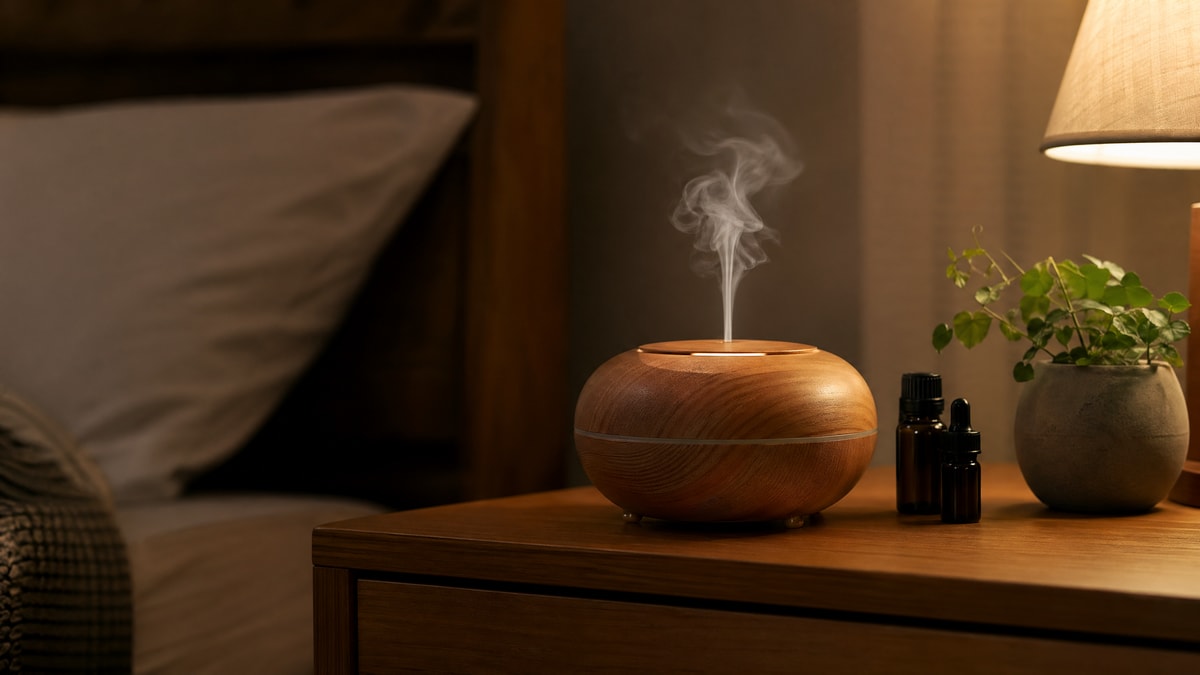
During the day, users can usually monitor a diffuser, adjust the mist level, open a window, or turn the unit off if the aroma becomes too strong. Overnight use is different because the diffuser may be running for several unattended hours. That changes the buying decision. The question is no longer “Does it smell good?” but “Will it keep running in a way that stays comfortable and safe while I sleep?”
An overnight diffuser should avoid three common problems: excessive scent concentration, unnecessary moisture in the air, and wasted electricity or essential oil. A timer directly addresses all three. Instead of operating for the full tank duration, the diffuser can stop after one, two, or four hours, depending on the user’s preference. This is often enough to create a relaxing sleep environment without running all night.
For users who are light sleepers, people with fragrance sensitivity, or those using smaller rooms, continuous mist can become unpleasant after several hours. The air may feel too heavy, and the scent can shift from calming to overpowering. A timer gives better control over exposure, which is one of the strongest arguments in favor of an Aroma Diffuser with timer for nighttime use.
What makes a timer-equipped diffuser better for sleeping hours
The biggest advantage of a timer is predictable operation. Many users want the diffuser to help them fall asleep, but they do not need active mist all night long. In practice, the first one to three hours are often the most important. That is when the aroma supports winding down, reading, meditation, or the transition into sleep. After that, continuous mist may offer little added benefit.
A timer also improves efficiency. Essential oils can be expensive, and running a diffuser for six to eight hours straight may consume more oil than necessary. If a user only needs a short period of fragrance, a timed cycle avoids waste. The same applies to electricity use, even if diffuser power consumption is relatively low. Over time, controlled use is simply more economical.
Another benefit is routine. Users often prefer devices that fit naturally into bedtime habits. Setting a timer is easier than trying to remember to shut the diffuser off manually. For operators in guest settings, wellness rooms, or managed accommodations, this convenience can also support a better user experience by making operation simple and reducing misuse.
Is a timer enough on its own? Not always
Although a timer is useful, it should not be treated as the only feature that matters. The safest and most practical overnight diffuser usually includes auto shut-off when water runs low. This feature is critical because it protects the unit and adds a layer of reassurance if the diffuser runs longer than expected or if the user forgets the selected setting.
Mist output control is another important factor. Some users assume that a timer solves all overnight comfort issues, but a high-output diffuser can still release too much moisture in a short period. In a small bedroom, that may leave the air feeling damp or concentrated with fragrance. A lower or adjustable mist level is often just as important as the timer itself.
Noise level also matters more at night than many buyers expect. A diffuser may have a timer, but if it produces noticeable fan, bubbling, or beeping sounds, it may still be a poor overnight choice. For sleeping environments, users should look for a quiet unit with simple timer settings, low-noise operation, and ideally lights that can be dimmed or turned off completely.
When an Aroma Diffuser with timer is especially useful
Bedrooms are the most obvious use case, but they are not the only one. A timer-equipped diffuser works well in nurseries, provided the oils used are appropriate and the room is not over-scented. In these spaces, timed operation helps adults avoid continuous mist through the entire night. It also makes the environment easier to manage without repeated checking.
It is also useful in dry seasons or air-conditioned rooms where users want a short window of aromatic mist before sleep. In such settings, the diffuser can create a more relaxing atmosphere without making the room too humid by morning. This is particularly valuable in smaller urban apartments, hotel rooms, or compact sleeping spaces where environmental changes are felt more quickly.
For hospitality operators, wellness studios, or short-term rental hosts, the timer feature can reduce the chance of guests leaving the device on longer than intended. That supports convenience, lowers operating waste, and improves the practical appeal of the appliance. In product selection, this makes an Aroma Diffuser with timer more attractive than a model with only a basic on/off function.
When a timer may not be the deciding factor
Not every user needs a timer to get good overnight performance. Some diffusers have very small tanks and naturally stop after a short period, while others use intermittent mist modes that already reduce runtime and oil consumption. In those cases, a timer is helpful but may not be the main reason to choose one product over another.
There are also users who prefer no scent while actually sleeping. They may only want fragrance during the pre-sleep routine, then switch the diffuser off before bed. For them, a timer can still be convenient, but it is not essential. The better question becomes whether the product offers flexible operation that matches their habits.
Likewise, in larger rooms with very low mist output, the timer may have less impact if the scent disperses gently and never becomes overwhelming. Here, tank size, diffusion strength, and ease of cleaning may influence satisfaction more than the timer. So while a timer is usually a positive feature, buyers should avoid judging a diffuser by that feature alone.
How users should evaluate a diffuser for safe and comfortable overnight use
Start by looking at runtime options. Useful timer settings are typically one hour, three hours, and six hours, though exact options vary by model. More flexibility is better because different room sizes and scent preferences need different run periods. A diffuser that only offers a single long setting may not provide the control needed for overnight comfort.
Next, compare tank capacity with mist output. A large tank combined with strong mist may be unnecessary for a small bedroom. In contrast, a moderate tank with adjustable output often gives better overnight balance. The goal is not simply longer runtime, but controlled runtime. This is where a timer and adjustable mist together create a more user-friendly solution.
Users should also review practical details such as cleaning access, water refill convenience, light controls, and shut-off behavior. Essential oil residue can build up over time, and a diffuser that is difficult to clean may lose performance or develop odor issues. Overnight use tends to be recurring, so long-term maintenance matters almost as much as first-night performance.
Common concerns users have about overnight diffusion
One common concern is whether it is unhealthy to run a diffuser while sleeping. In normal use, the main issue is usually not the diffuser itself but overuse. Too much oil, too much mist, or poor ventilation can make the room uncomfortable. A timer helps reduce this risk by limiting exposure, especially for users who are sensitive to scents or who sleep in enclosed spaces.
Another concern is moisture buildup. This can happen if a diffuser runs continuously in a small room, especially in already humid climates. Again, timed operation is a practical safeguard. It does not eliminate the need for good judgment, but it lowers the chance of creating a damp sleeping environment. Users should still match the diffuser size and output to the room.
People also worry about forgetting to turn the unit off. This is exactly where a timer provides peace of mind. Combined with auto shut-off, it creates a more trustworthy overnight setup. For many buyers, this reassurance is one of the biggest reasons a timer-equipped model feels like the better option.
Final verdict: is an Aroma Diffuser with timer better for overnight use?
For most users, the answer is yes. An Aroma Diffuser with timer is generally better for overnight use because it offers more control, improves convenience, reduces waste, and helps prevent overly strong scent or excessive mist during unattended hours. It aligns well with what users actually need at night: comfort without constant monitoring.
However, the timer should be viewed as part of a broader feature set, not as a standalone guarantee of better performance. The best overnight diffuser also includes auto shut-off, quiet operation, suitable mist output, and easy maintenance. These factors work together to create a safer and more satisfying experience.
If the goal is to enjoy fragrance while falling asleep without letting the diffuser run longer than necessary, a timer is one of the most useful features to prioritize. For users and operators making a purchase decision, that makes timer-equipped models a smarter and more practical choice in many real overnight scenarios.
Industry Global
Related News
- 00
0000-00
How to Shortlist a Home Decor Manufacturer for Export Projects - 00
0000-00
Fragrance Wholesale in 2026: What Buyers Need to Know Before Importing - 00
0000-00
How to Choose an Aroma Diffuser for Home Based on Room Size - 00
0000-00
How to Pick Decorative Items for Office Without Making It Look Cluttered - 00
0000-00
Home Styling Tips That Make Small Spaces Feel More Put Together
Weekly Insights
Stay ahead with our curated technology reports delivered every Monday.
Related News
 How to Shortlist a Home Decor Manufacturer for Export ProjectsHome Decor manufacturer guide: learn how to shortlist export-ready partners for Home Fragrance diffuser, Decorative Items for office, and custom gifts for corporate with less sourcing risk.
 Fragrance Wholesale in 2026: What Buyers Need to Know Before ImportingFragrance wholesale in 2026: learn how to evaluate Home Fragrance diffuser, Aroma Diffuser for home, Scented Candles custom, and Essential Oils for relaxation before importing.
 How to Choose an Aroma Diffuser for Home Based on Room SizeAroma Diffuser for home guide by room size: compare Home Fragrance diffuser types, Reed Diffuser benefits, Essential Oil Diffuser price, and Aromatherapy Oils for sleep to choose the best fit.
 How to Pick Decorative Items for Office Without Making It Look ClutteredDecorative Items for office made simple: discover Home Styling tips, smart office supplies bulk order ideas, and sourcing advice from a Home Decor manufacturer for a clean, professional workspace.